360 Design Budapast - Design Fair Concept
A palimpsest originally refers to a rewritten parchment on which the faint traces of an earlier text remain visible beneath the new lines. Today, the term describes the layered nature of time—the interweaving presence of past and present in cities, spaces, and objects.
The central concept of 360 Design Budapest translates this way of seeing into spatial form. The exhibition venue itself, the former building of the National Office of Monument Protection, is a palimpsest: its layers—Baroque foundations, wartime destruction, and a modernist rewriting in the 1970s—do not erase one another but subtly intertwine. Past and present continue to coexist as echoes of each other.
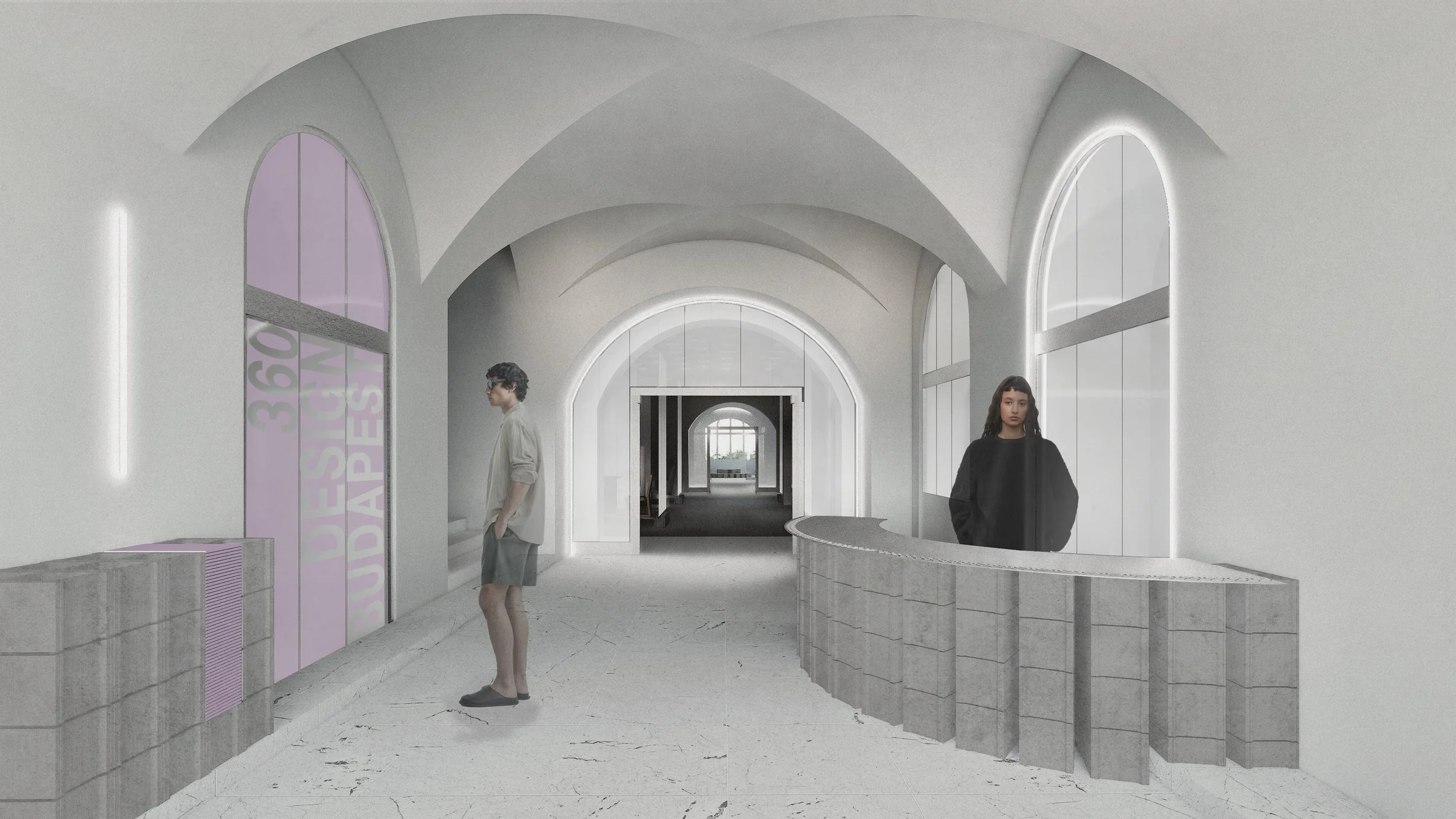
This perspective shapes not only the exhibition’s theme but also its realization. The building is not merely a frame but an active participant: its arches, material imprints, the Domanovszky mosaic, and Mária Túry’s tapestry become integral elements of the exhibition alongside contemporary design objects. The two floors embody different spatial logics—historical layering below, modernist structure above—yet both are built from the same toolkit, just as a palimpsest remains a single text even when multiple eras speak through it.
Ground Floor Concept – Circularity
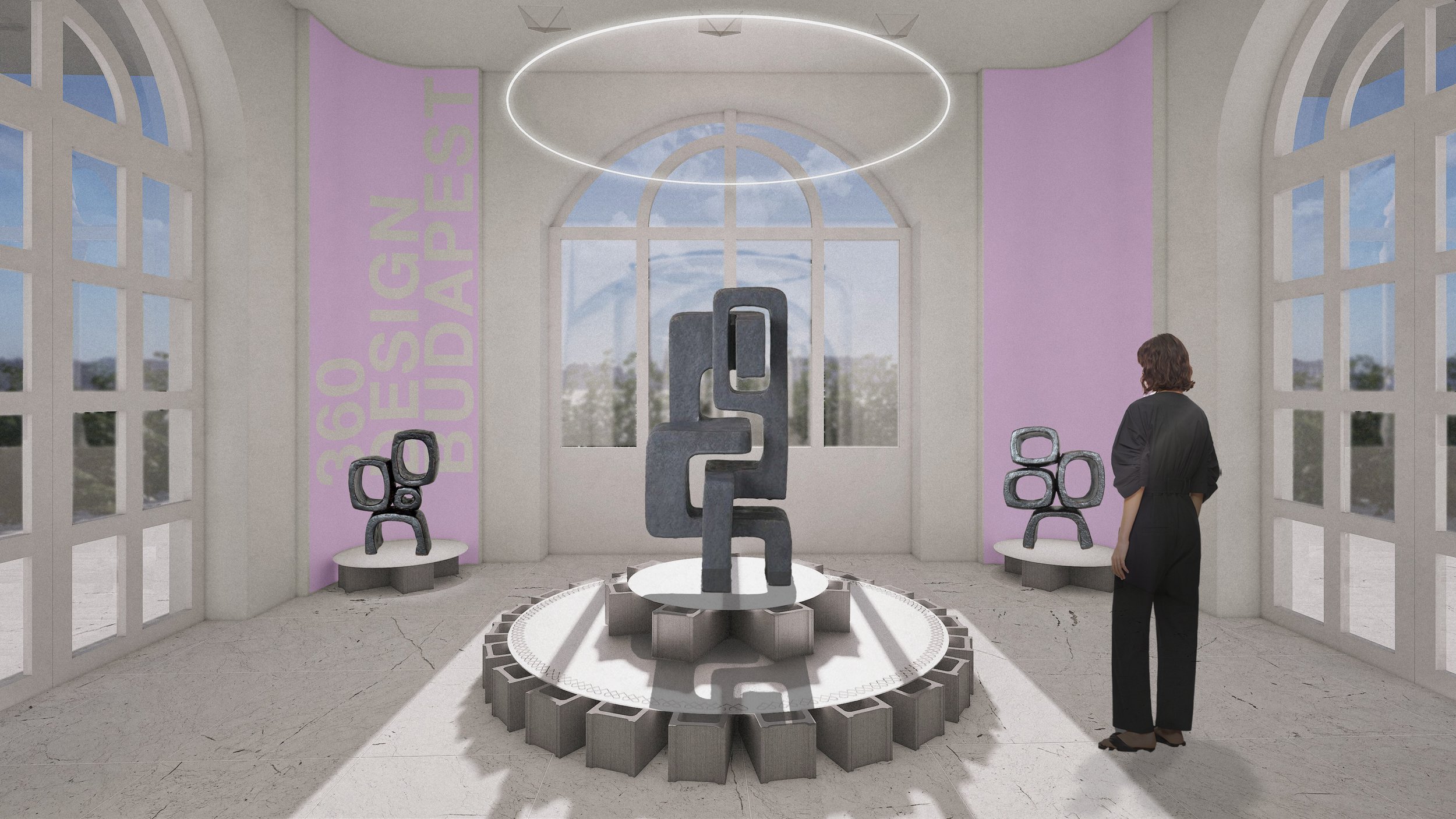
On the ground floor, the exhibition rejects linear notions of time in favor of circular, interwoven temporal layers. Here, time does not move forward but loops, returns, and reshapes itself—it does not tell a single story but evokes the simultaneous presence of different eras and influences.
Visitors do not follow a predetermined route but move within an open system where spatial exploration also becomes intellectual movement: each viewpoint reveals new relationships. Past, present, and future fold into one another, merging as overlapping layers.
Ground Floor Structure
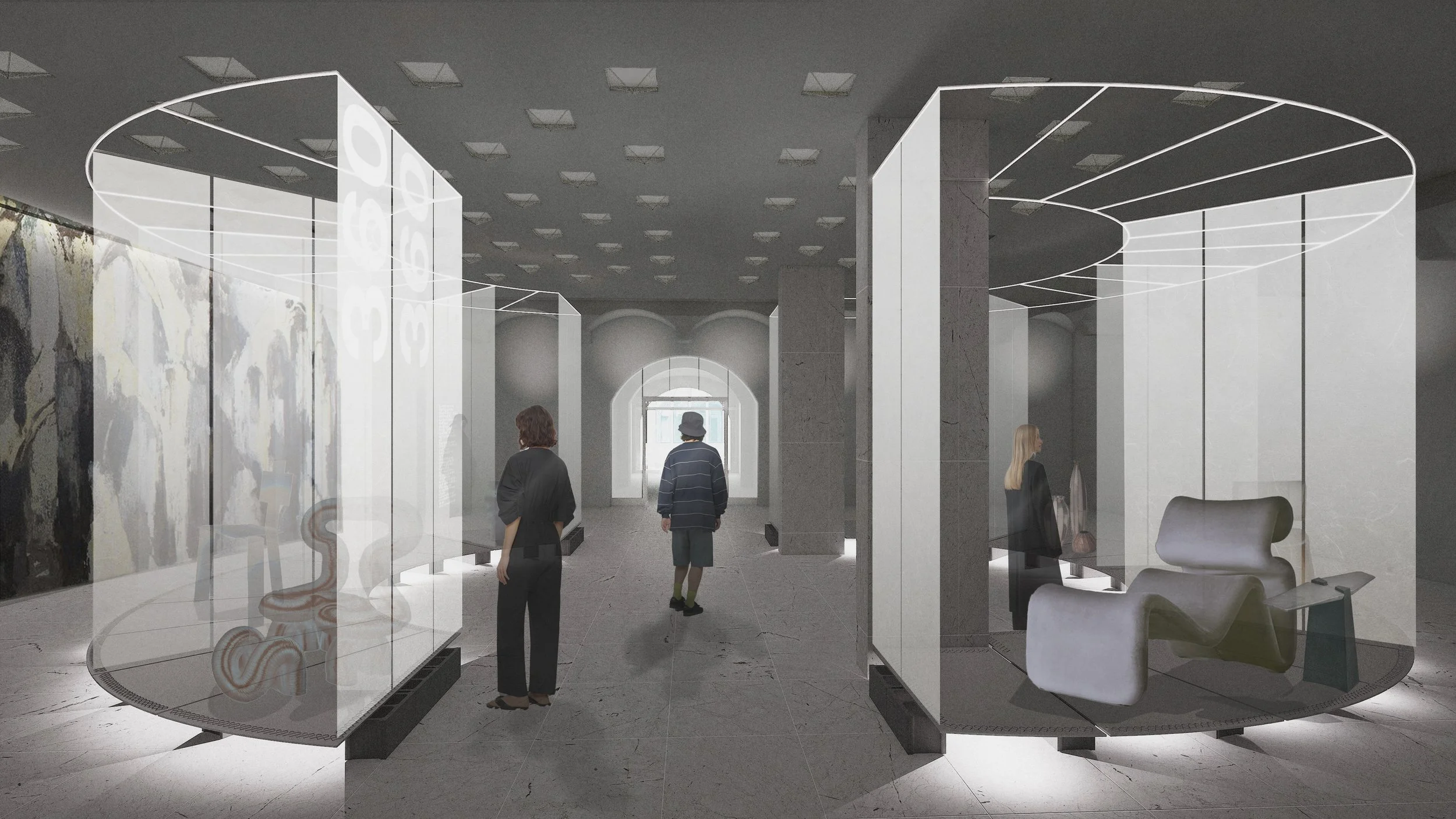
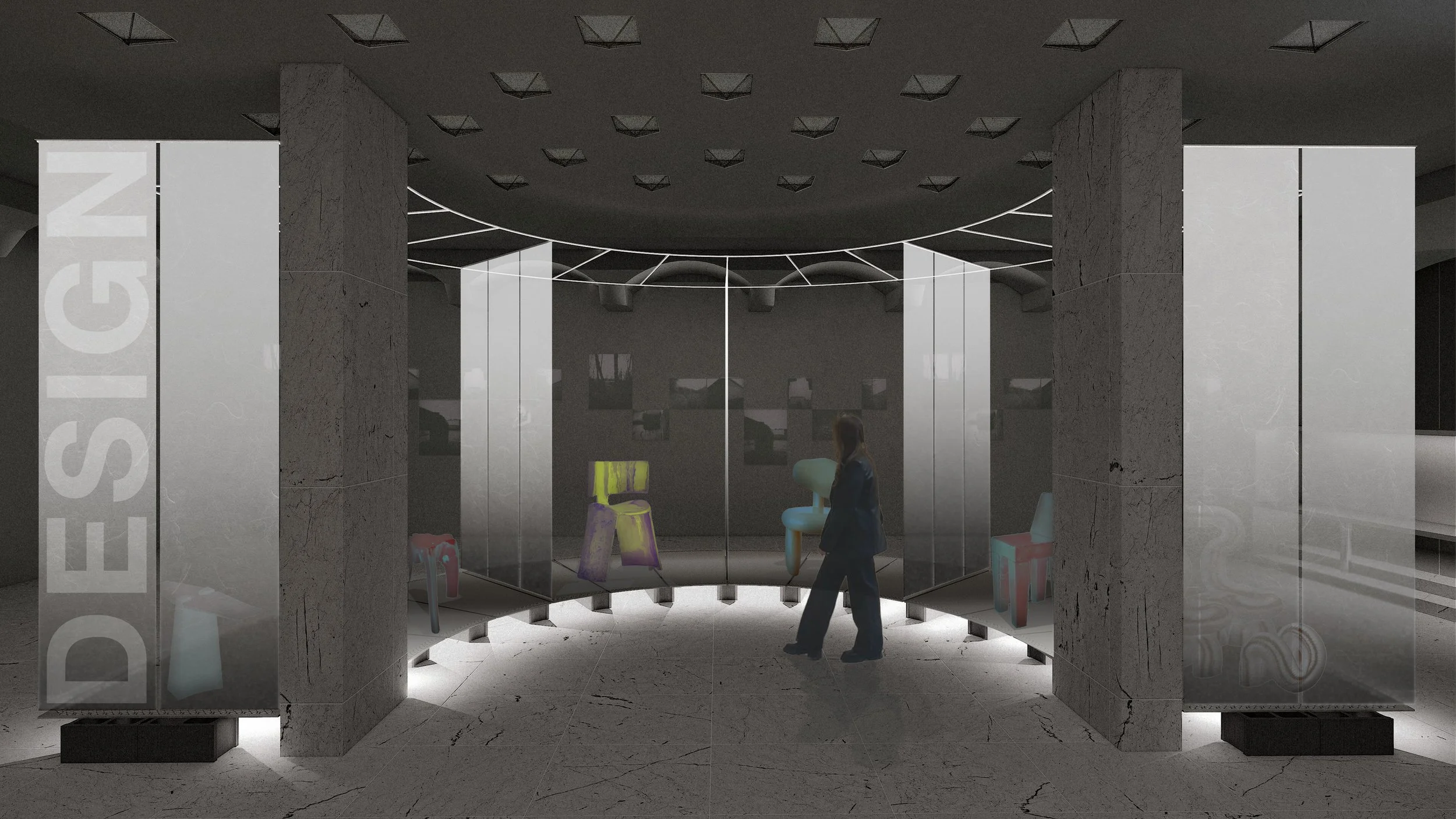
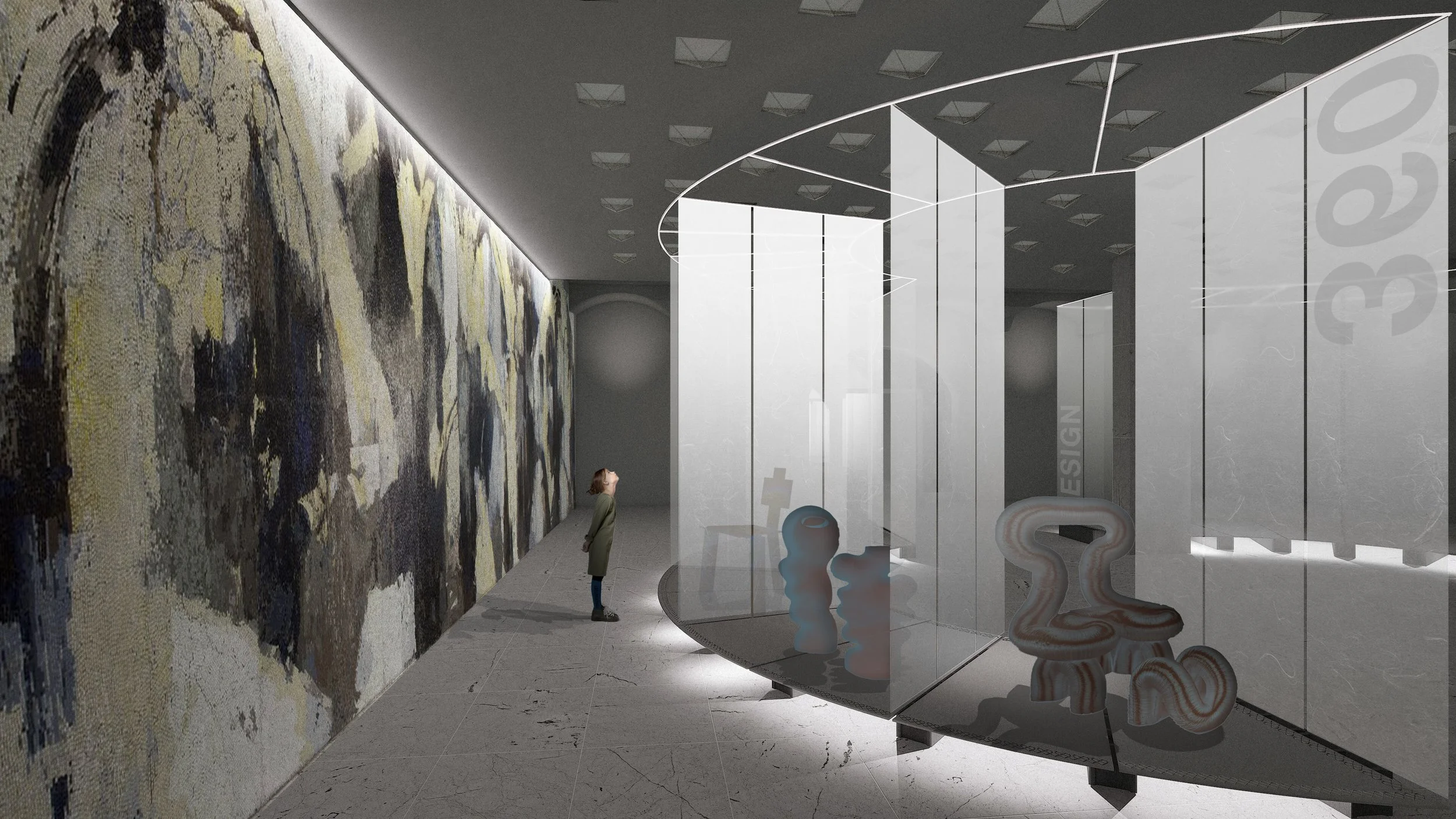
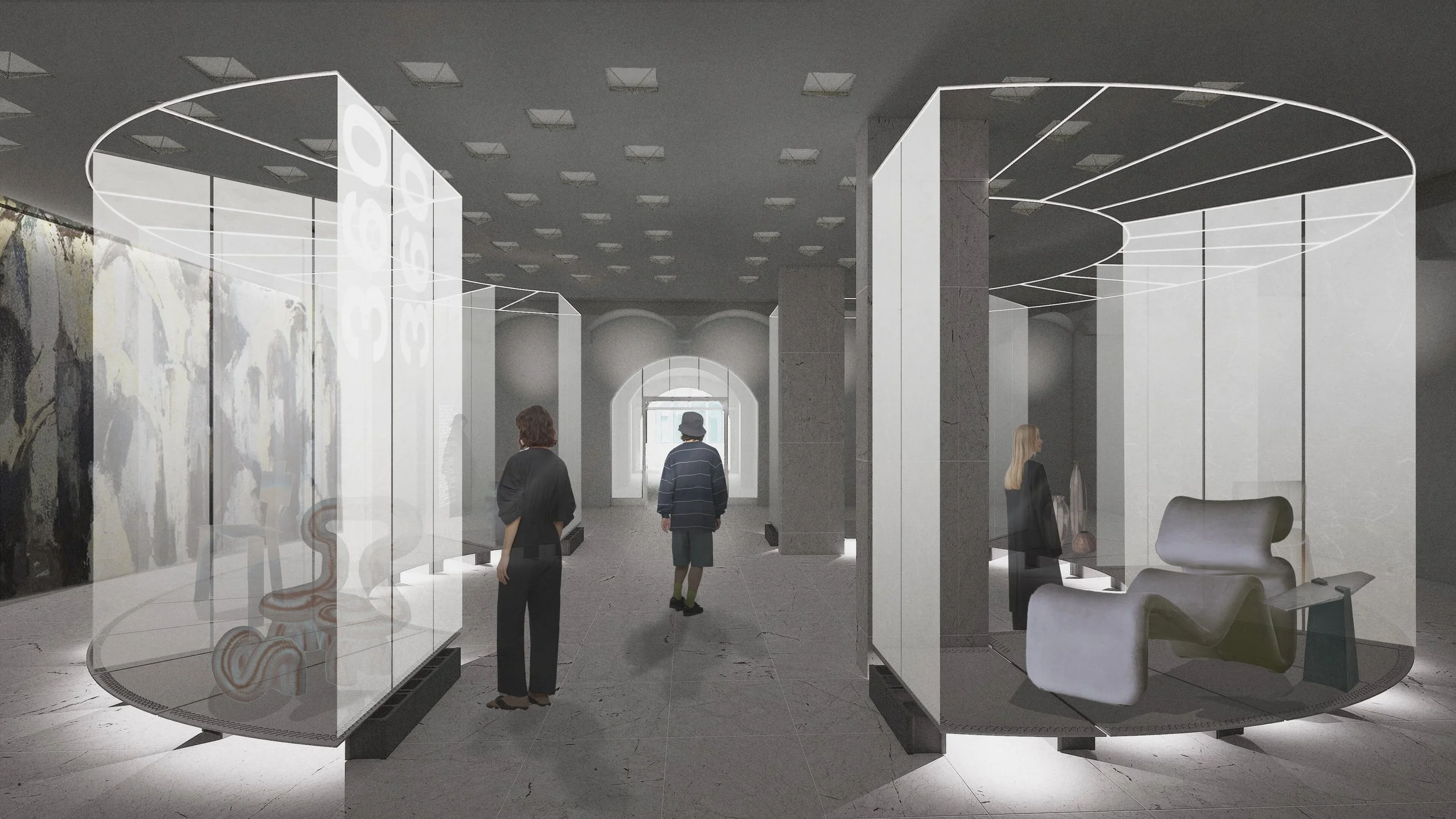
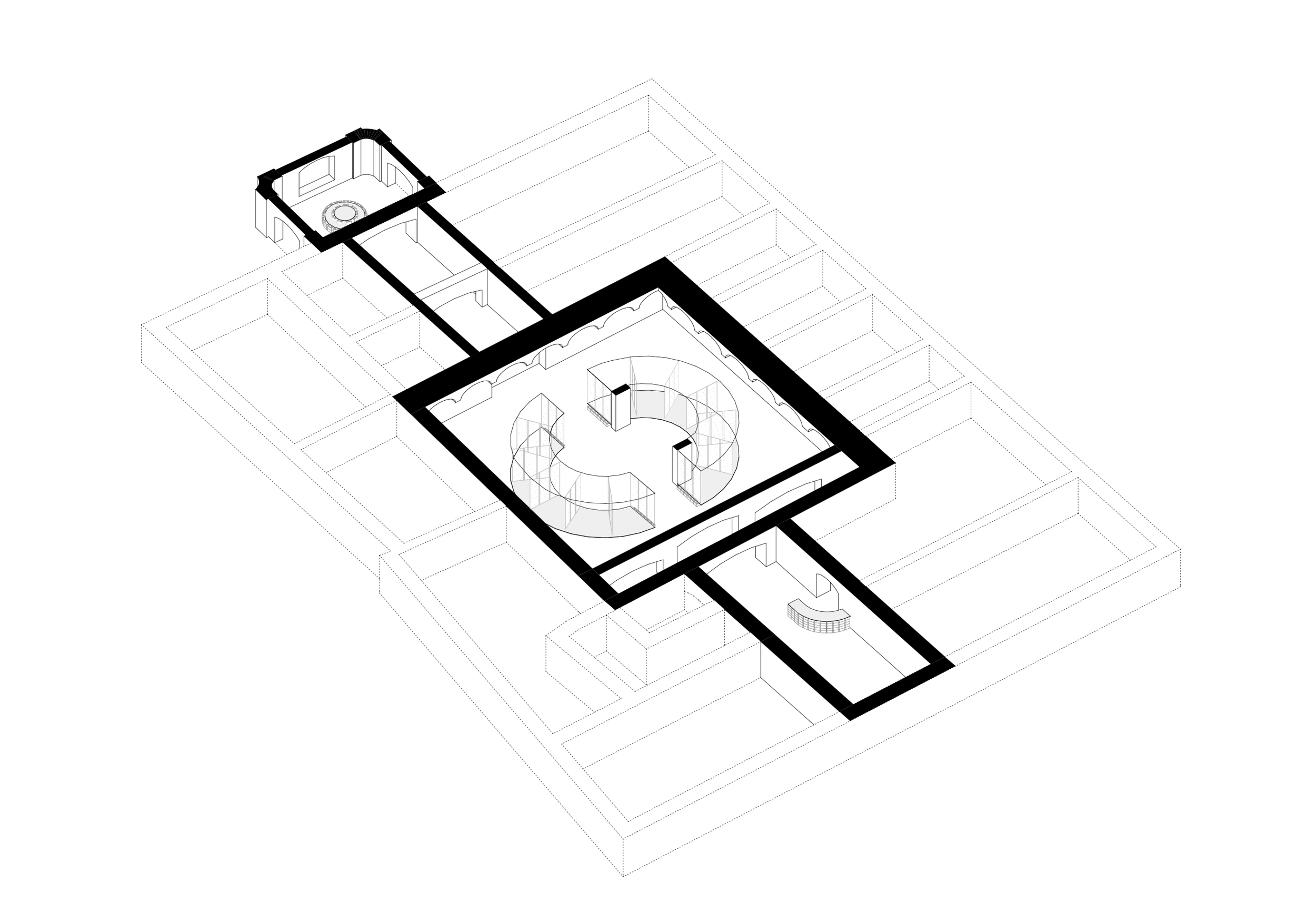
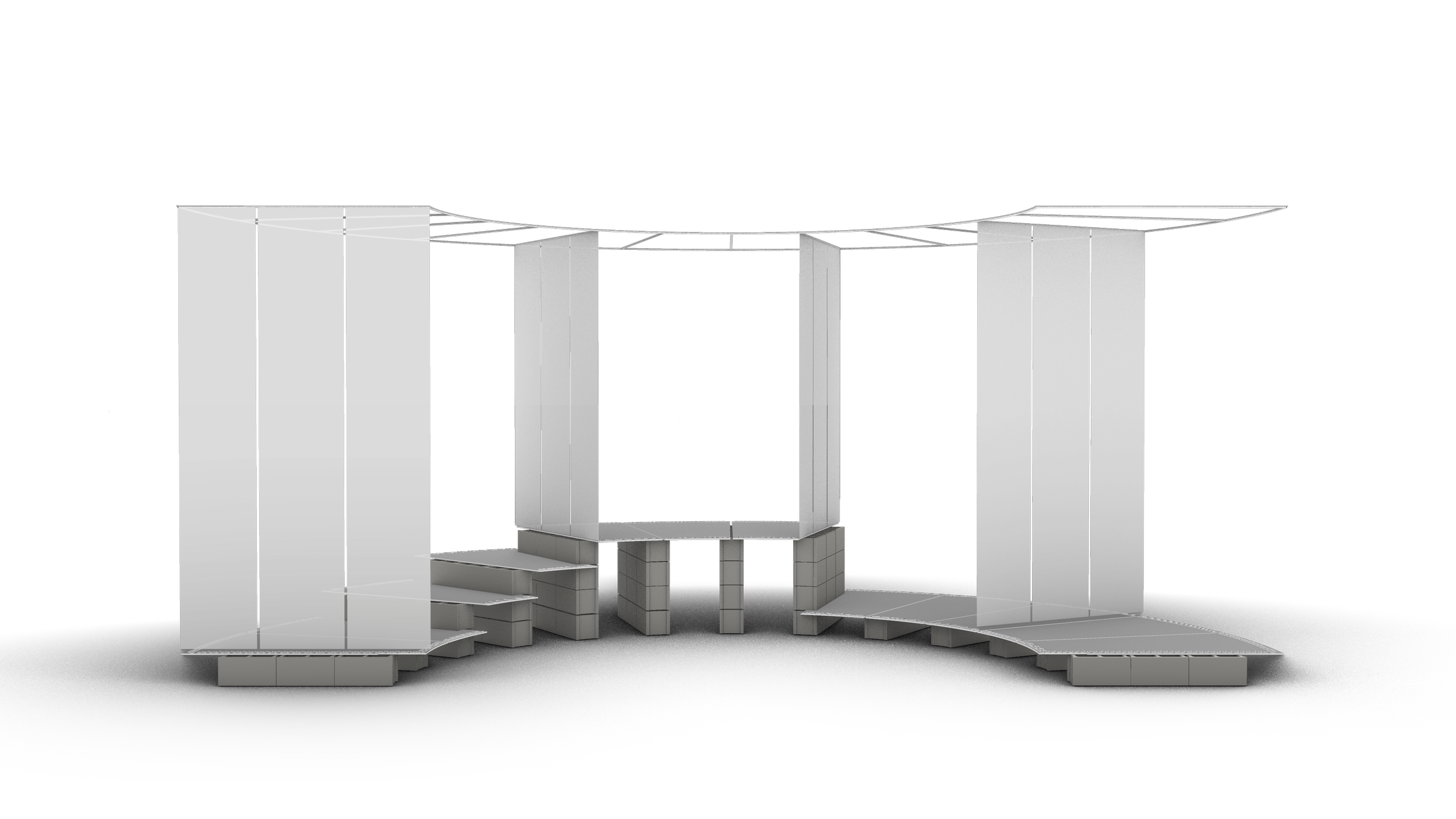
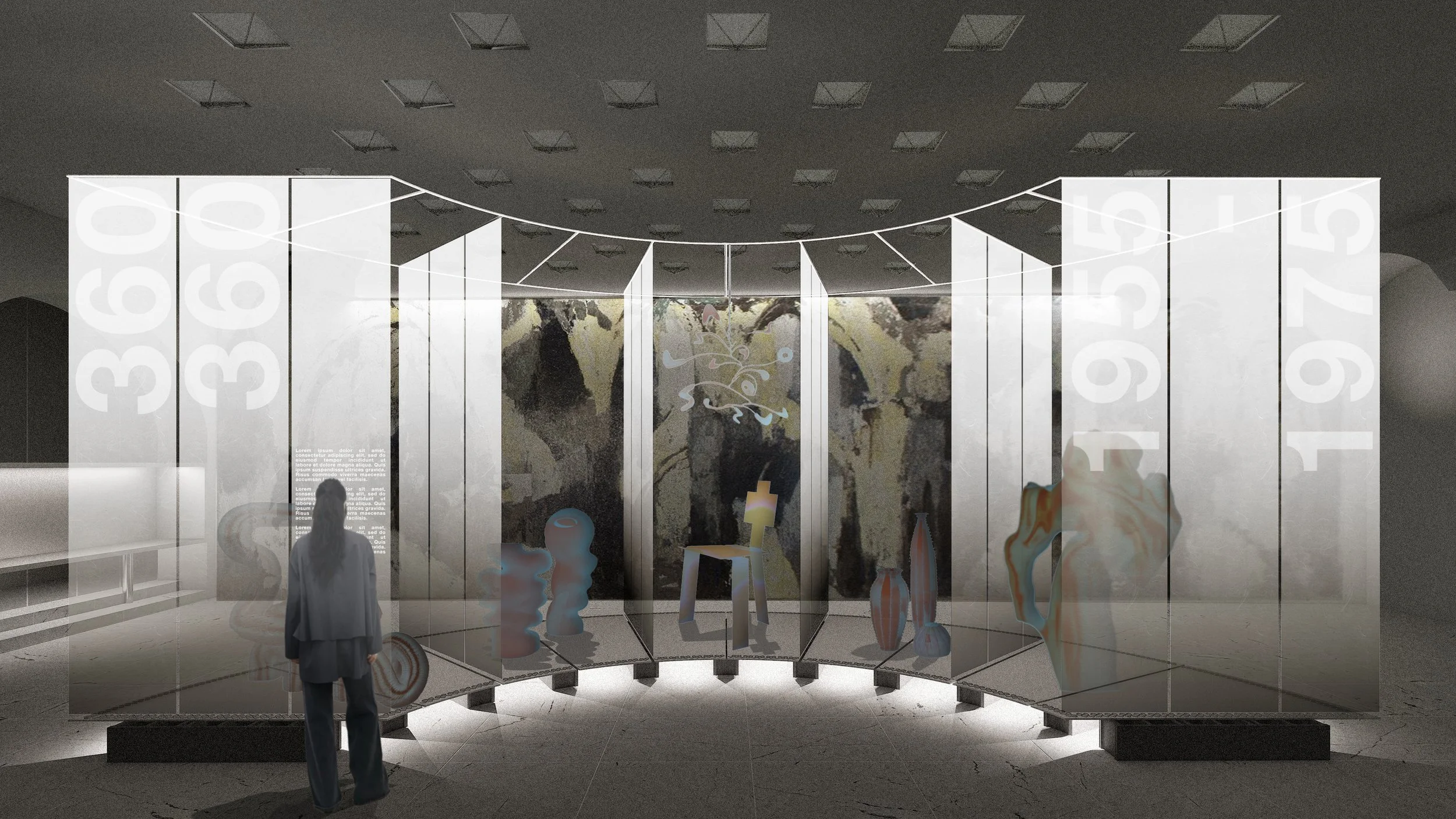
The central installation foregrounds cyclicality and the dissolving coexistence of eras instead of linear time. Two offset circular segments appear as spatial cross-sections of time, where the past is not behind us and the future not ahead of us, but all around us. The structure can be circled, offering different meanings from every angle—through transparencies, overlaps, and layers.
The spatial organization follows a modular principle: its height, articulation, and openings can be adapted as needed. The segments can be read as independent units, yet they respond to one another—the number, position, and density of the curtains continuously redraw internal relationships. The resulting structure offers not only spatial but conceptual flexibility: it is both a framework and a question, becoming complete only from shifting perspectives.
Ground Floor Materiality
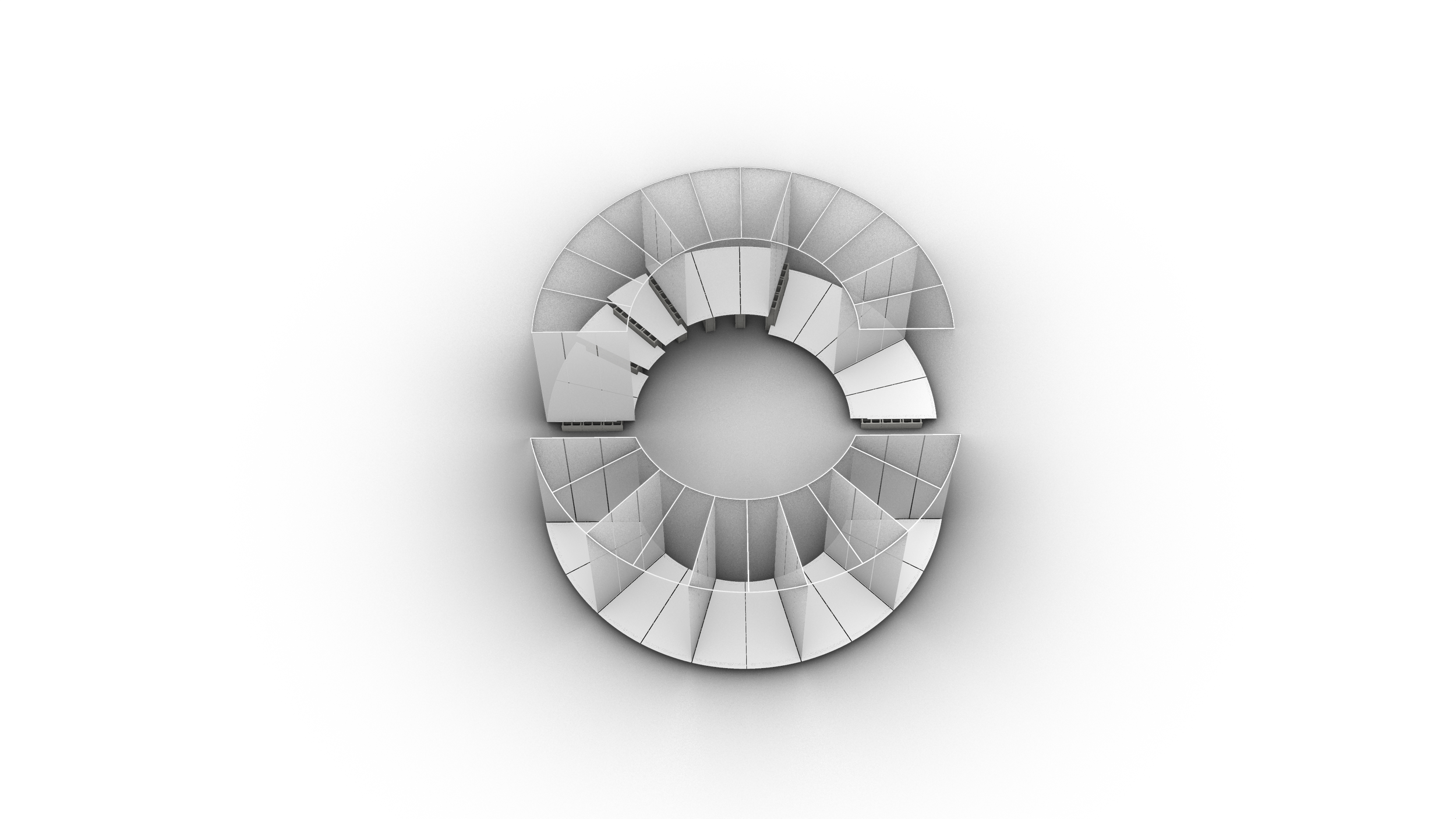
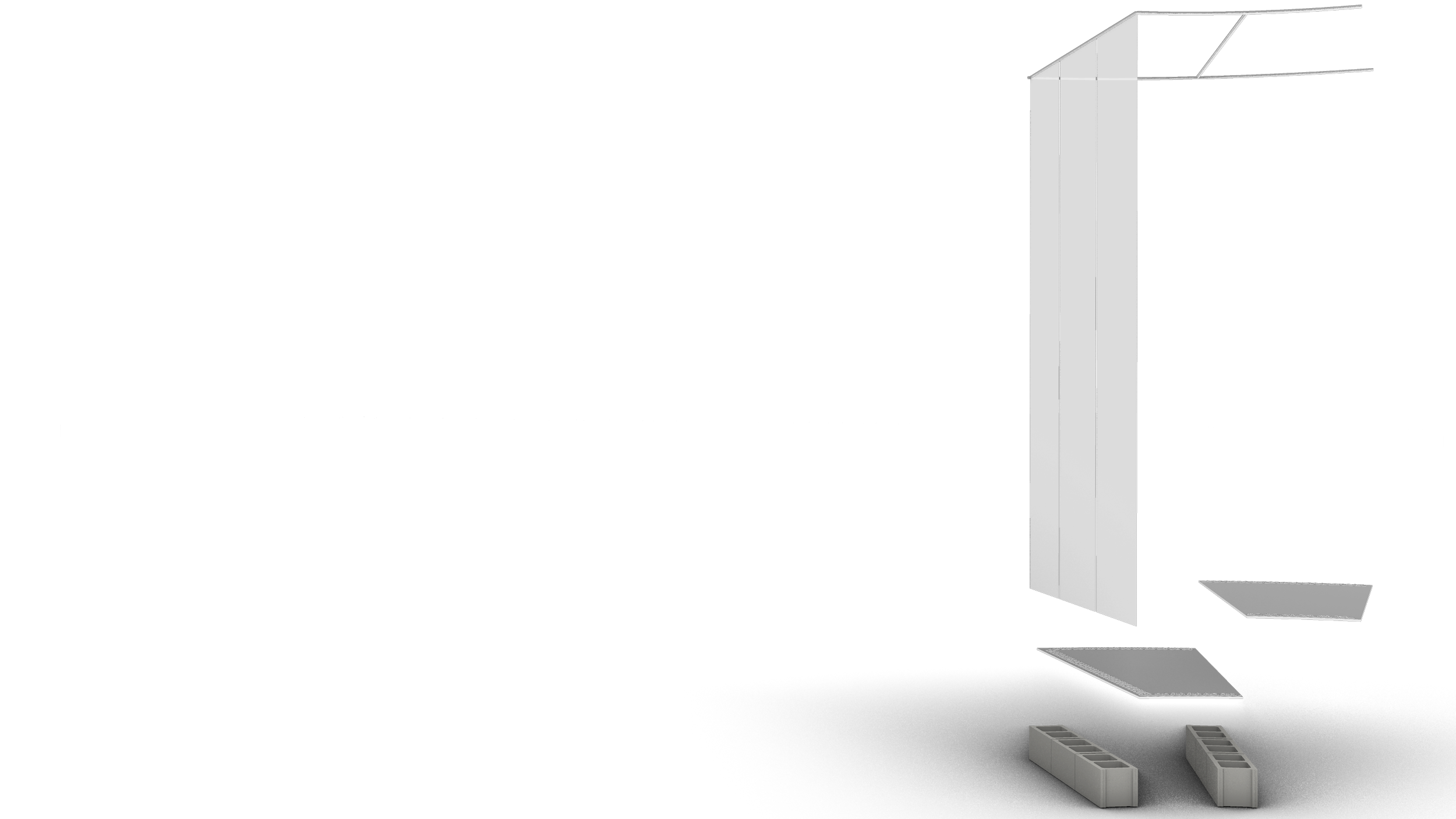
The materials of the installation are not merely functional but act as markers of the space’s temporal depth. Each element resonates subtly with the building’s past: engraved metal carries coded memory, textiles filter light and meaning between layers, and concrete becomes a reinterpreted foundation. The materials do not conceal the layers but reveal them—simultaneously separating and connecting.
• Semi-transparent textile curtain
Provides gentle separation while allowing visual permeability between objects, reinforcing the sense of temporal layering. It may also serve as a surface for printed exhibition texts.
• Edge-engraved aluminum segments
The smooth, neutral surfaces provide structural strength and a restrained backdrop for exhibited objects. Along their edges runs a delicately engraved motif series referencing the visual rhythms of traditional Hungarian weaving techniques, forming a unique, non-chronological timeline. These coded patterns point to inspirations from earlier eras and specific artifacts, making the past present not as illustration but as a subtle vibration, a layered presence.
The segments are 100% recyclable and require only a fraction of the energy needed to produce primary metal. If needed, they can be substituted with locally sourced raw steel floor plates.
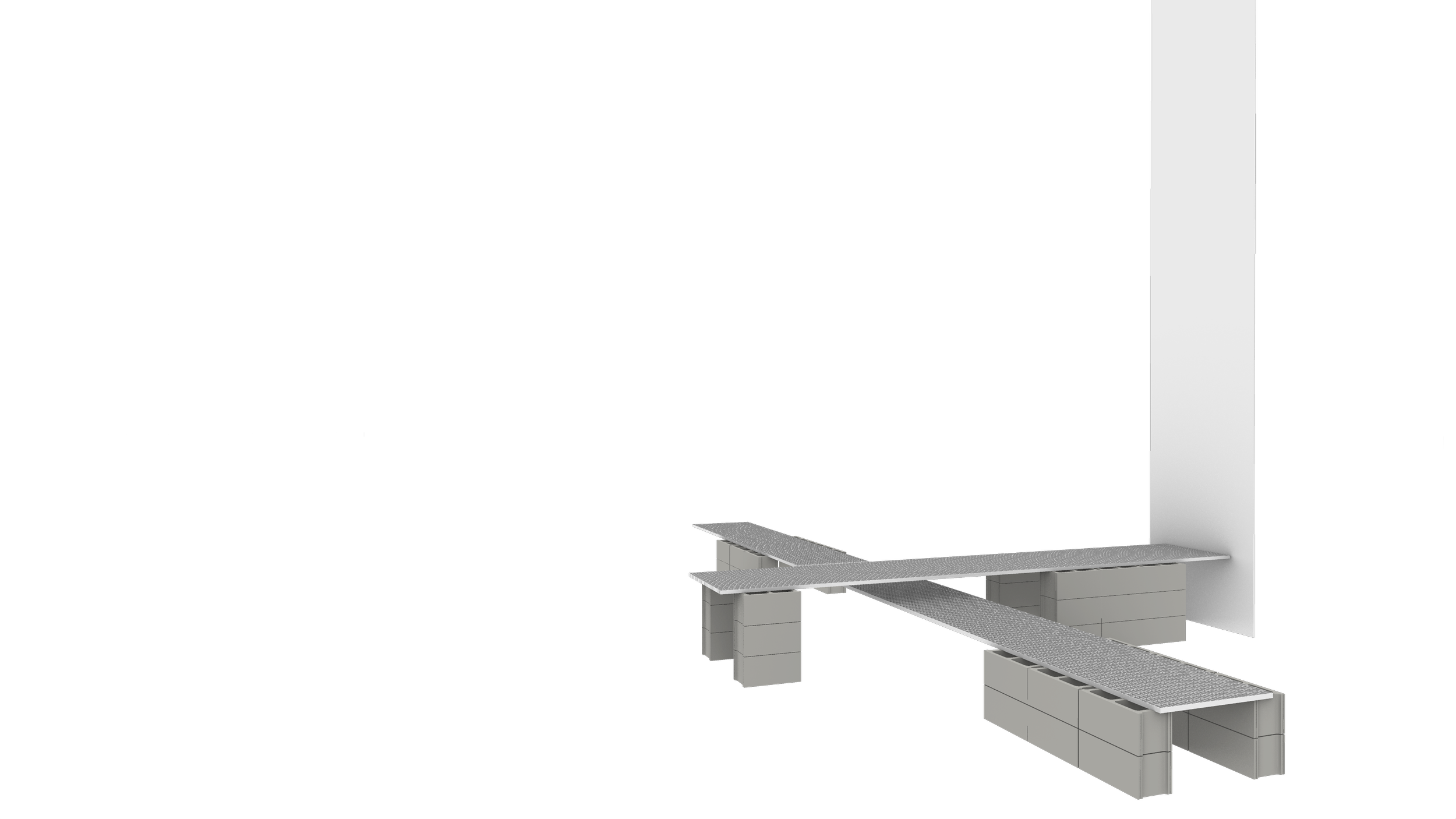
• Concrete shutter blocks
Used to support the aluminum segments, providing modular elevation, a raw appearance, and sufficient load-bearing capacity. 100% reusable.
Upper Floor Concept – Spatial Weaving
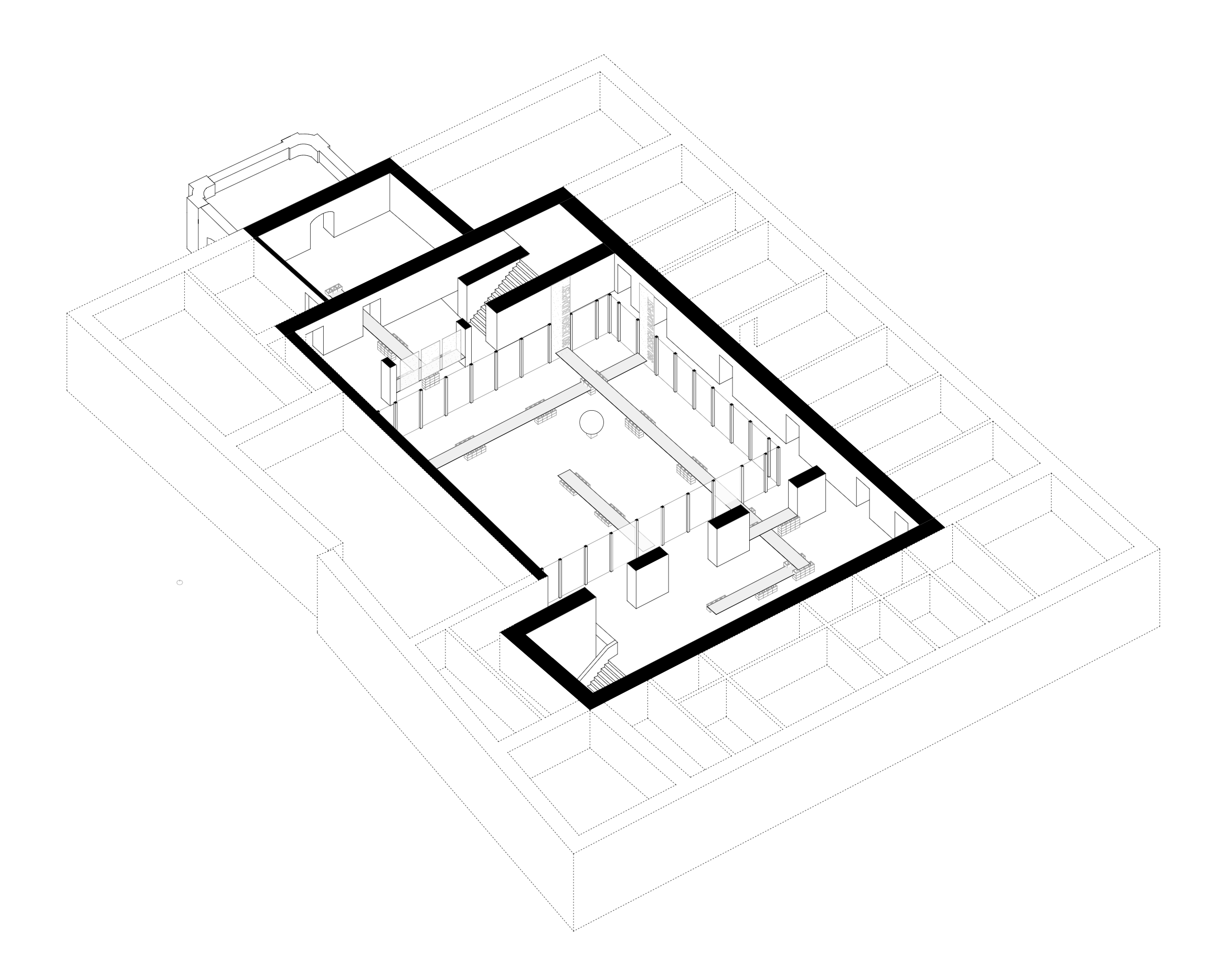
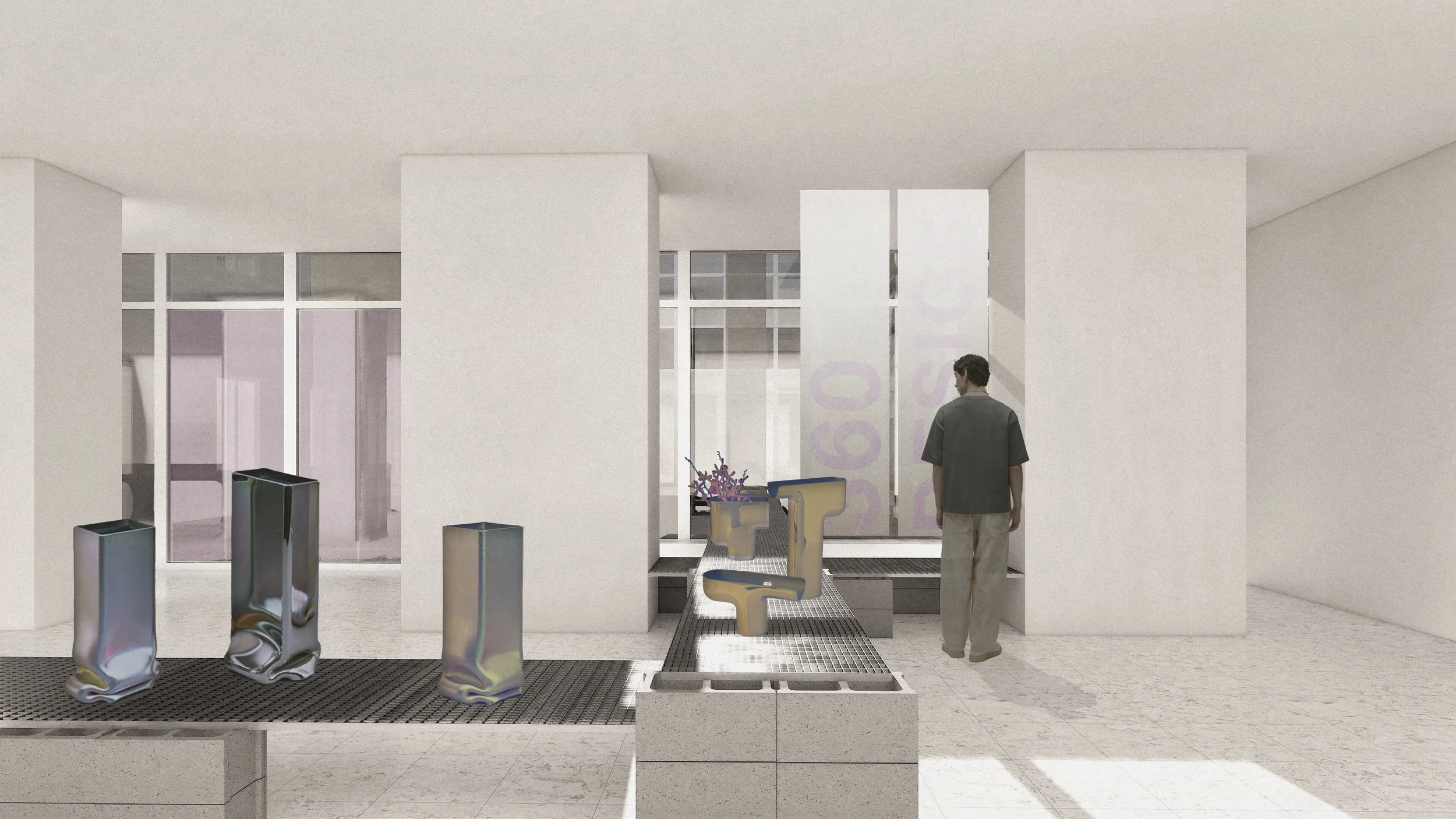
The upper level is defined by a modernist intervention from the 1970s: steel grid structures, angular forms, and a façade with regular rhythm. In this space, the exhibition emphasizes connections and interactions between temporal layers—working with the same toolkit as the ground floor but speaking a different spatial language.
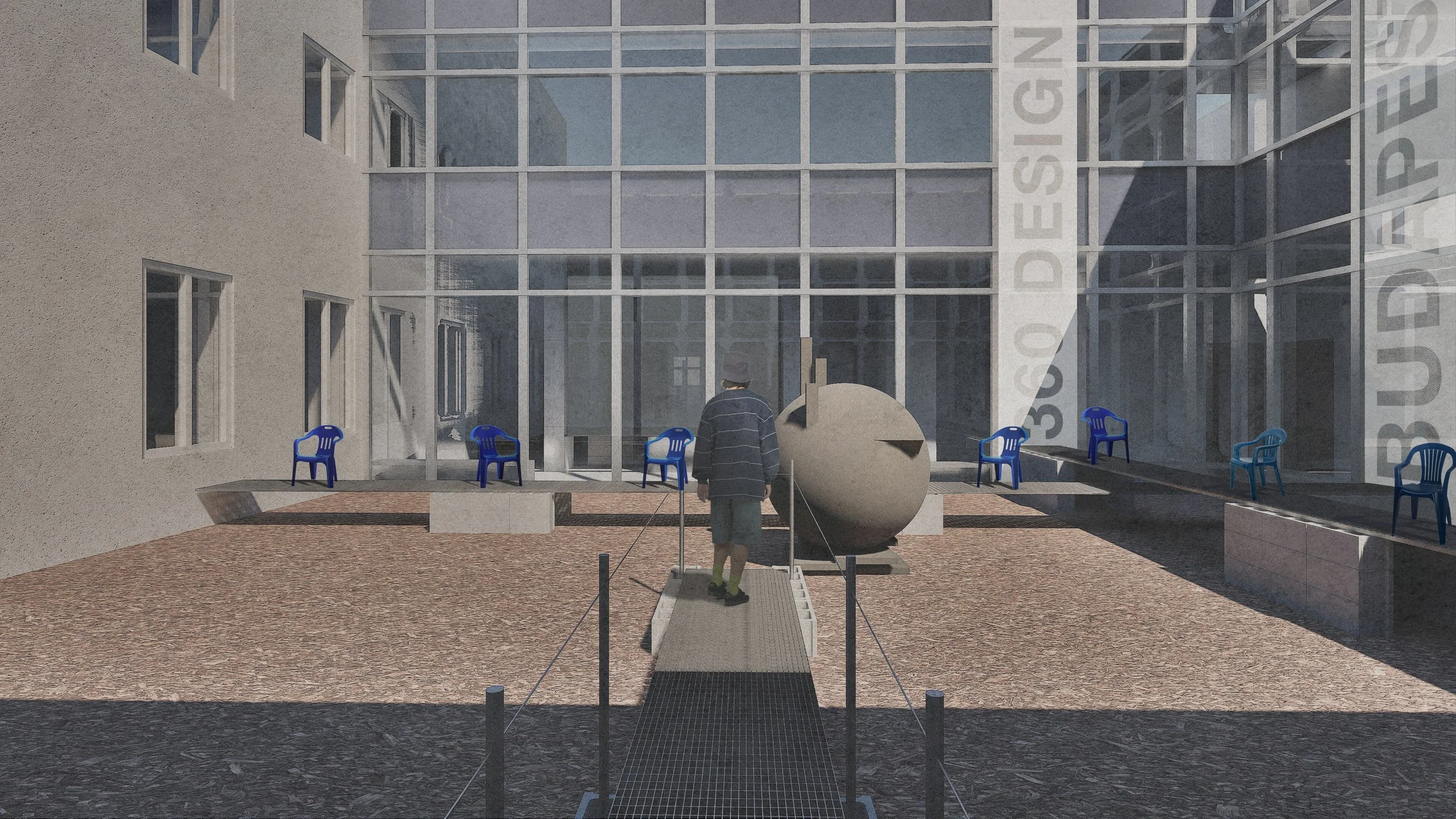
Responding to the existing modernist grid, the installation seems to continue weaving it: a kind of temporal fabric emerges where exhibited objects connect imprints from different eras. At times, this fabric exceeds its own boundaries—flowing through doorways, spanning the atrium, glancing out of windows. The space does not close but continues to write itself, opening passages, connections, and new interpretive possibilities. Contemporary works do not merely reference the past but activate it—interweaving it into a continuous system of present and future.
Upper Floor Materiality
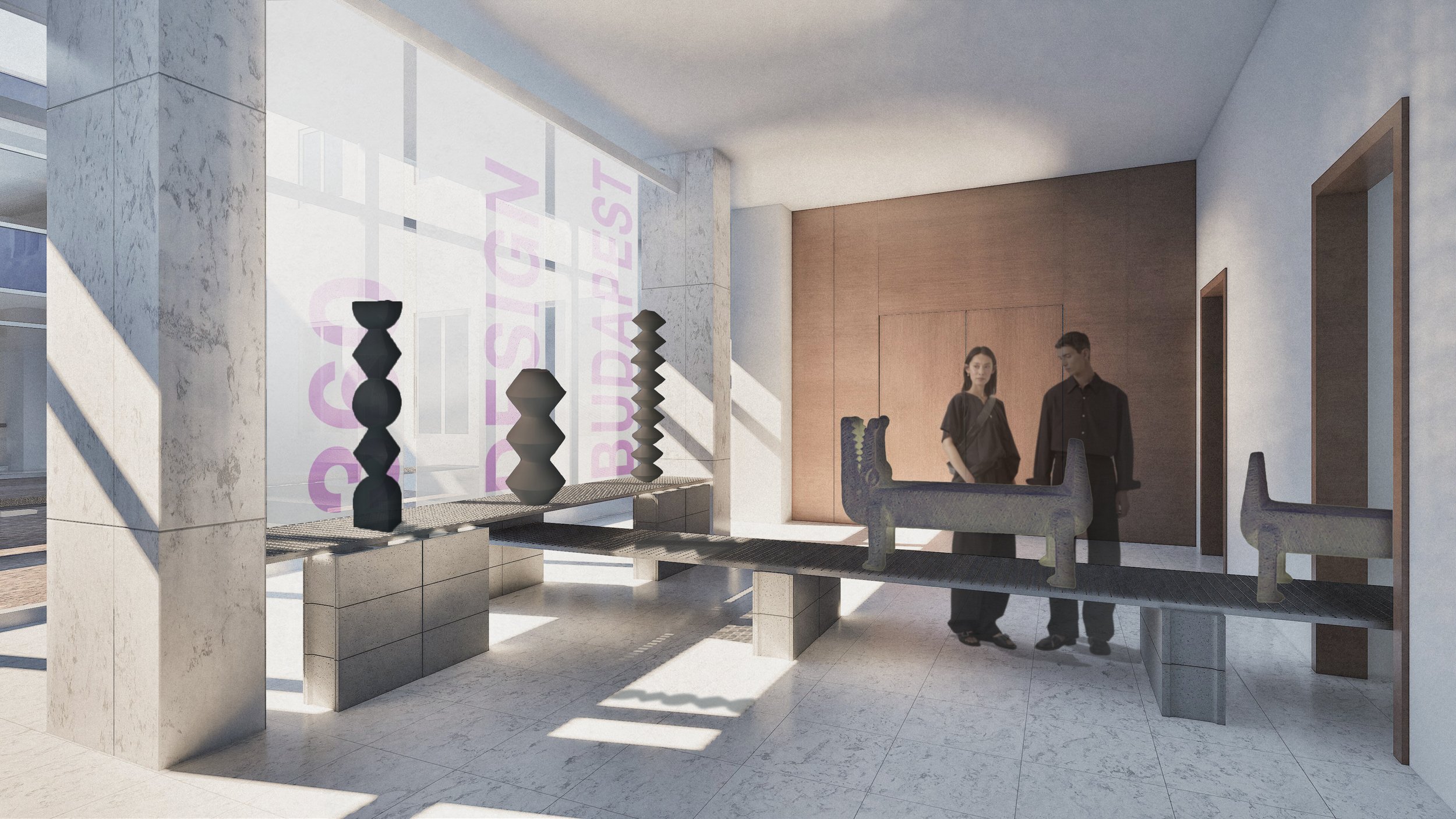
On the upper level, materials do not only support but also draw: the banded system of metal grates establishes a subtle rhythm in the exhibition fabric. Offcuts from the ground-floor aluminum segments are repurposed here as base plates, while textiles continue to function as both transition and separation. Layers do not stack but interconnect as a network—they do not cover but reveal.
• Semi-transparent textile curtain
Provides gentle separation while allowing visual permeability between objects, reinforcing the sense of temporal layering. It may also serve as a surface for printed exhibition texts.
• Aluminum base plates
Offcuts produced when cutting the ground-floor aluminum segments are reused on the upper-level walking grid as base plates, providing a level surface for exhibited objects.
• Steel walking grating
The structural support for exhibited objects. 100% reusable.
• Concrete shutter blocks
Used to support the steel grating, providing modular elevation, raw appearance, and sufficient load-bearing capacity. 100% reusable.
Upper Floor Structure
The structure of the upper-floor exhibition—using stacked and layered steel grating—further articulates the modernist grid of the space.
The installation weaves through the architecture, opening connections between temporal layers and viewpoints. The past connects to the present not as background but as active presence.