Lilith Cocktail Bar
Taking its name from the mythological figure of Lilith, associated with darkness, autonomy, and defiance, the project translates these references into spatial experience, unfolding through a sequence of interventions that gradually recalibrate perception and meaning.
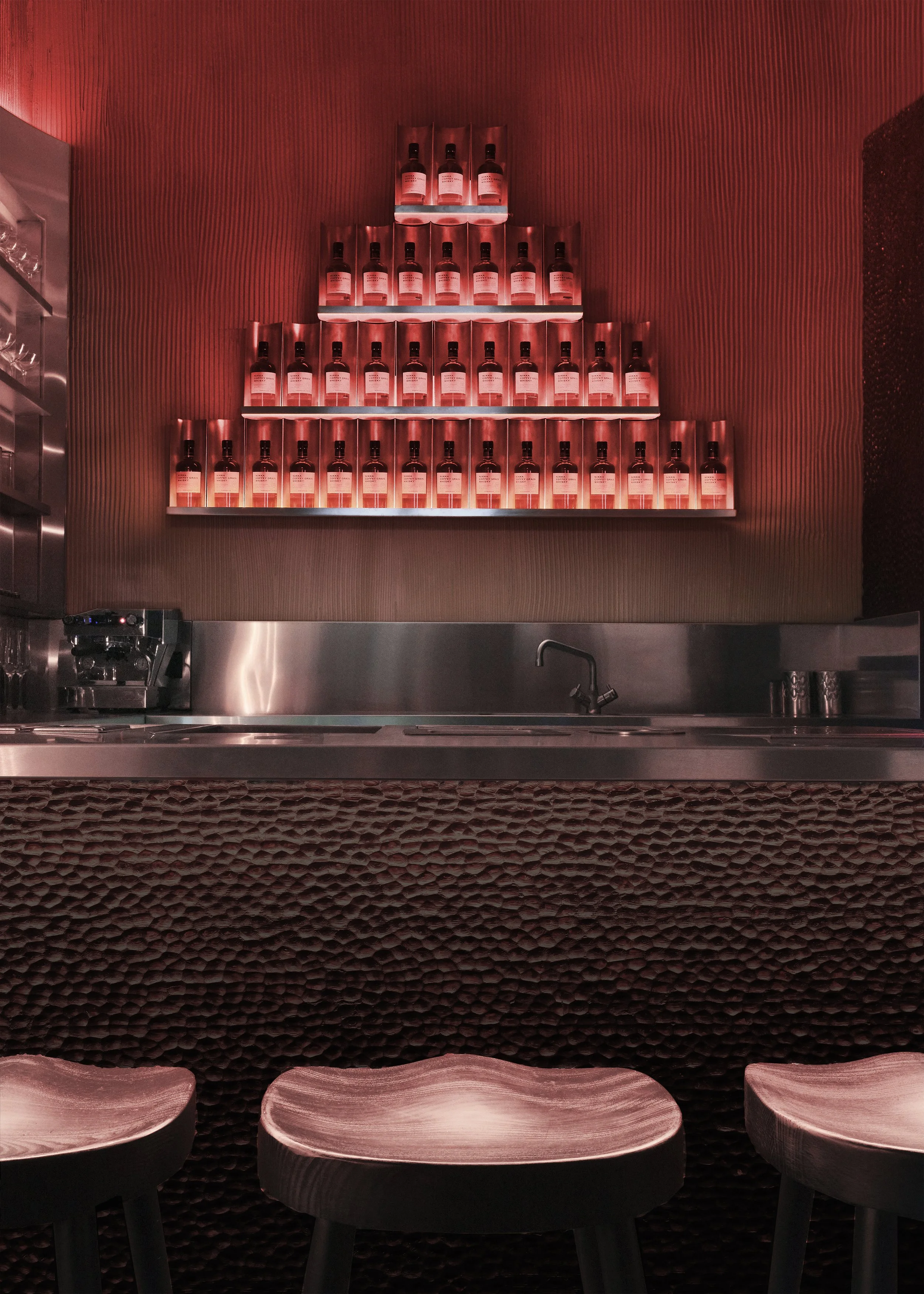
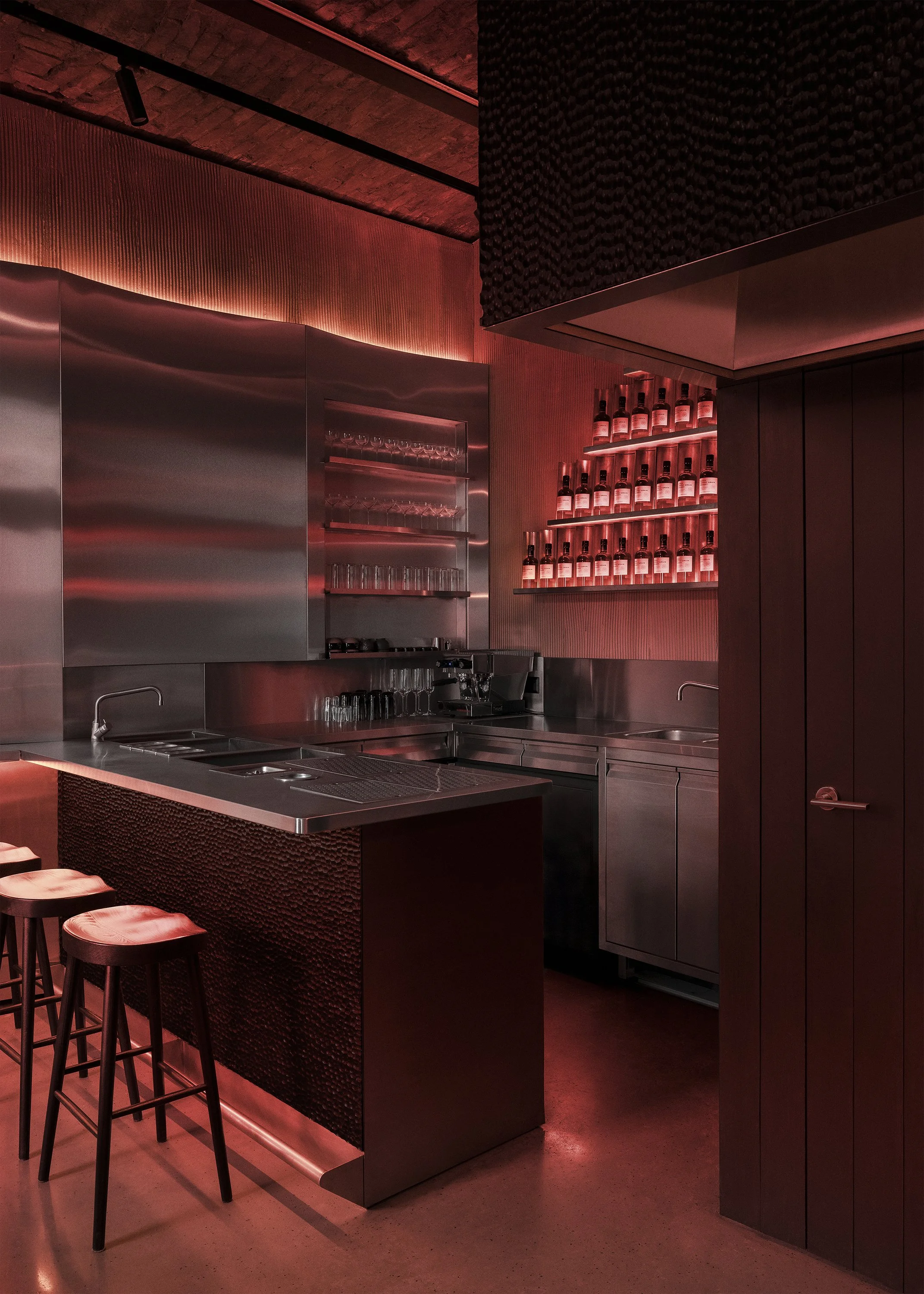
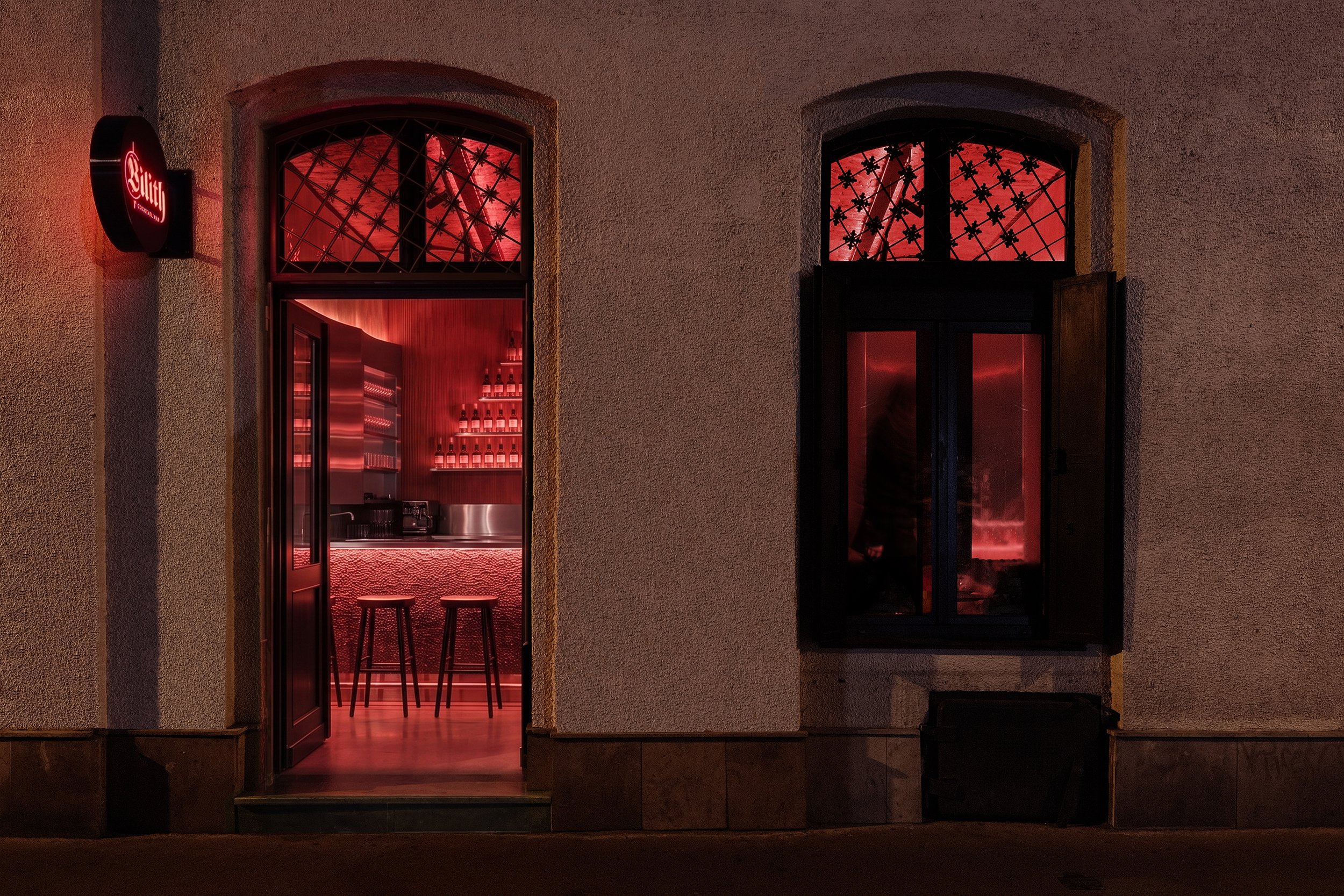
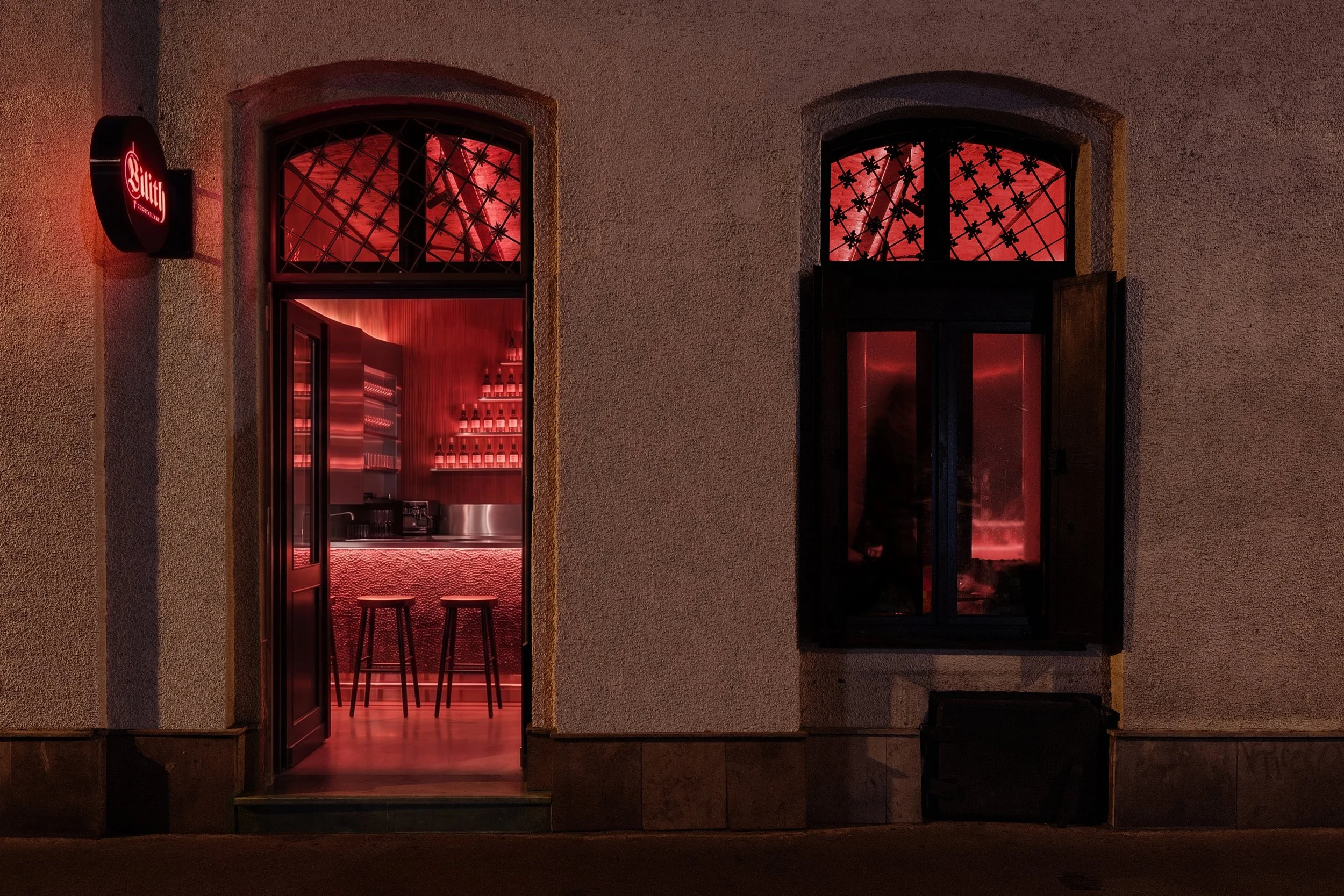
Located along the dense street life of Budapest’s Jewish Quarter, Lilith is a cocktail bar whose atmosphere spills outward, visible from the street as a shifting condition—at times saturated in a deep red glow, at others revealing a calmer, more subdued interior—luring passersby inward with a presence that feels faintly unsettling, yet difficult to resist.
LOCATION
Budapest, Hungary
TYPOLOGY
Hospitality
SIZE
20 sqm
Photos by Matti Varga.
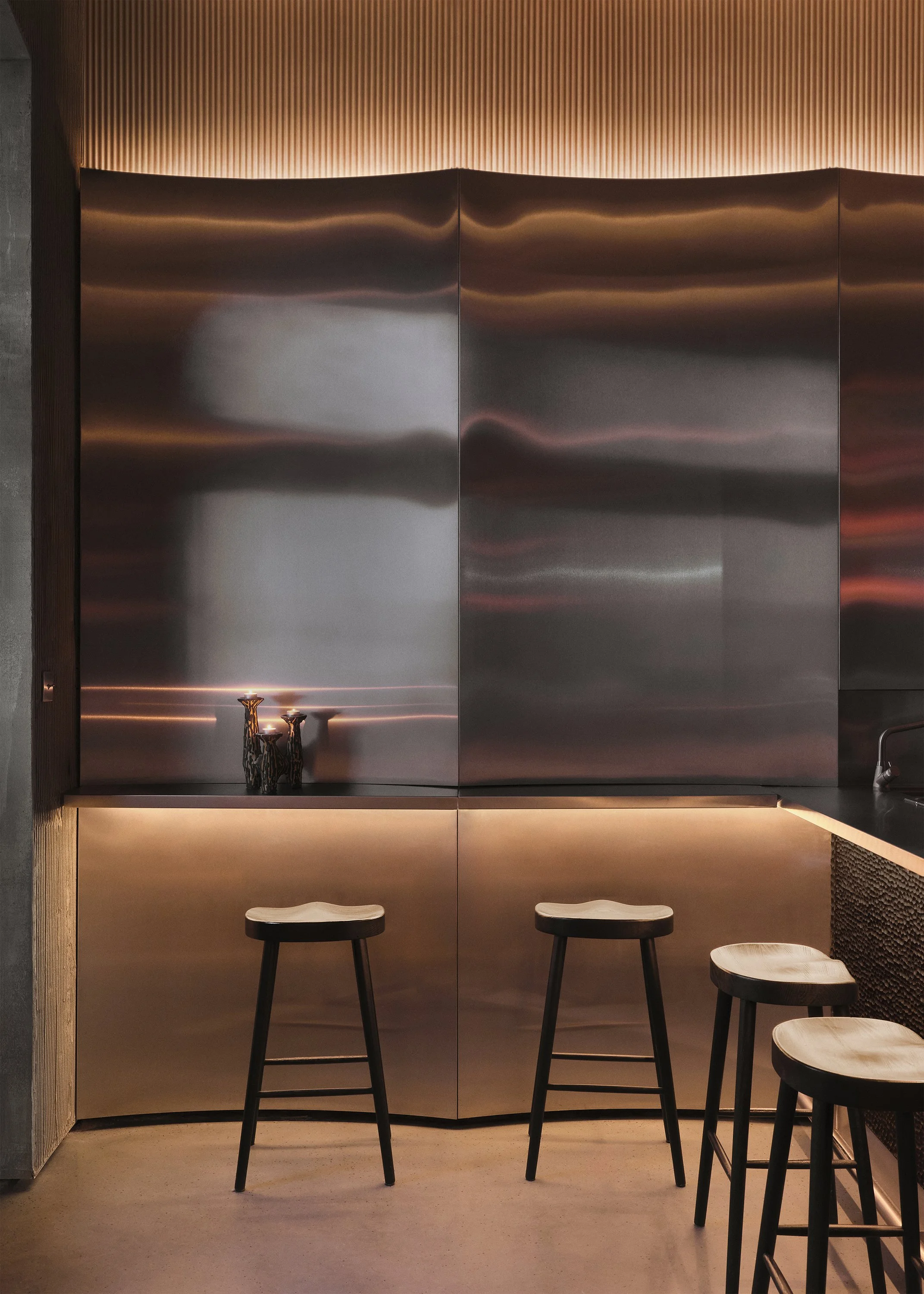
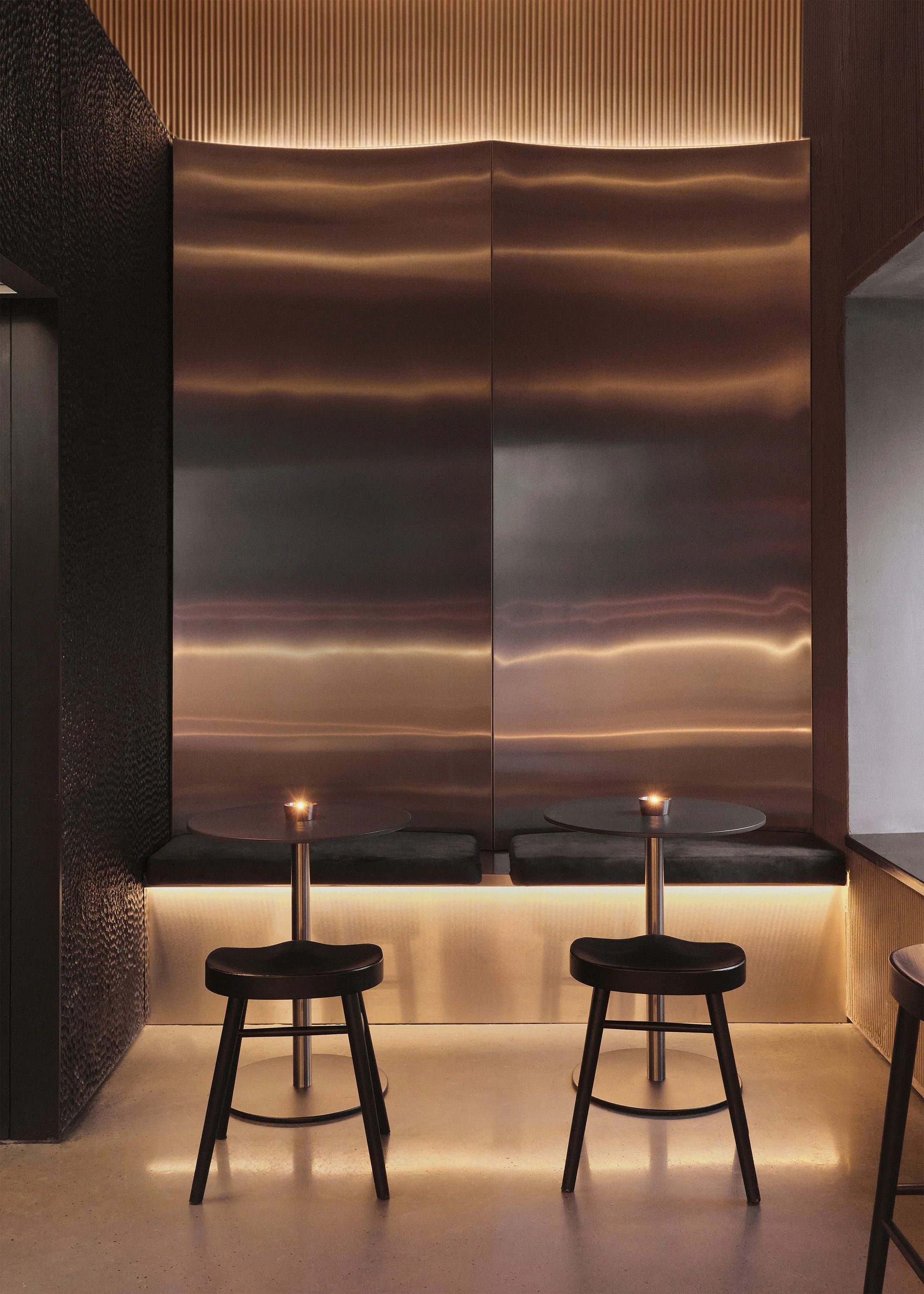
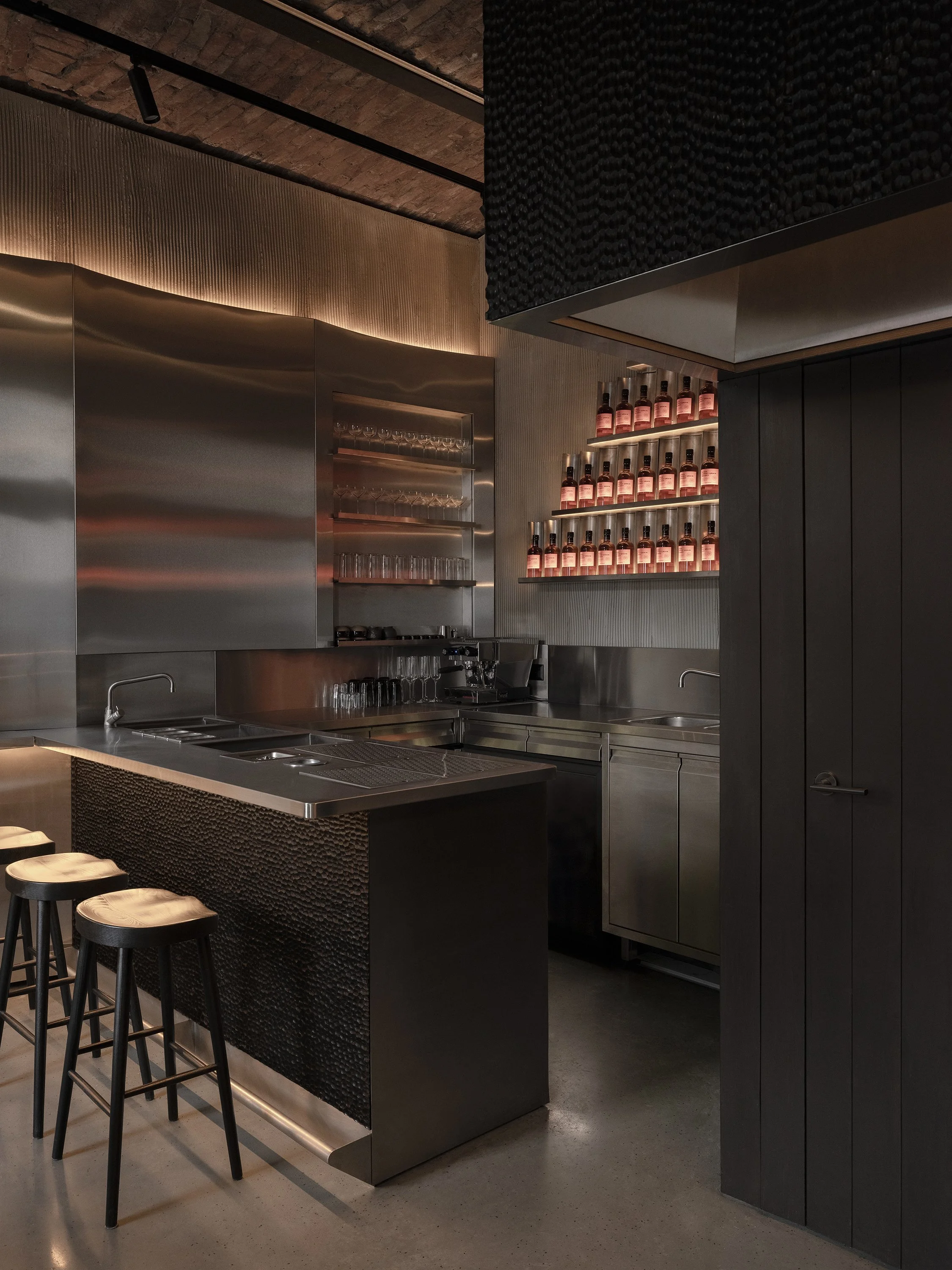
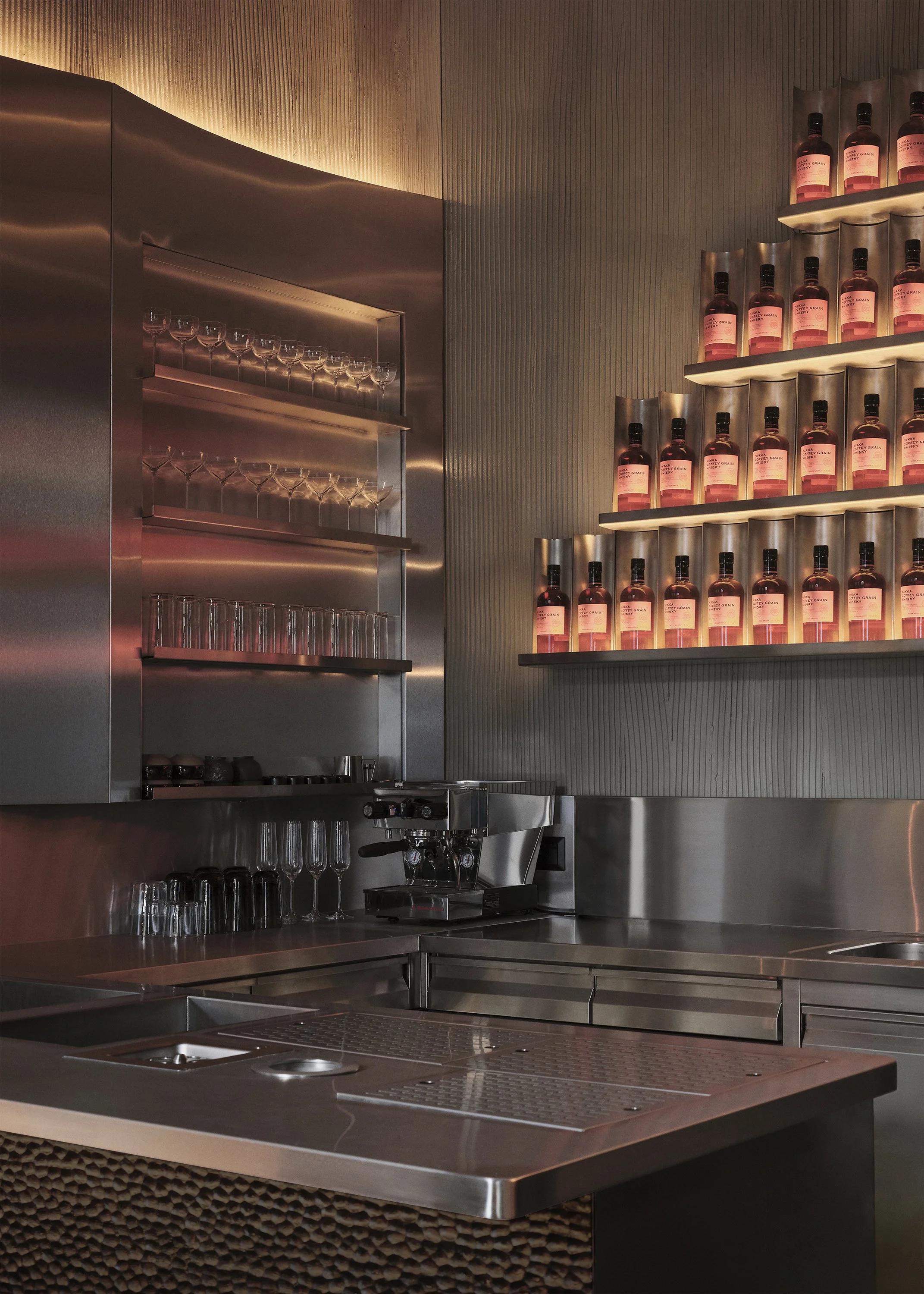
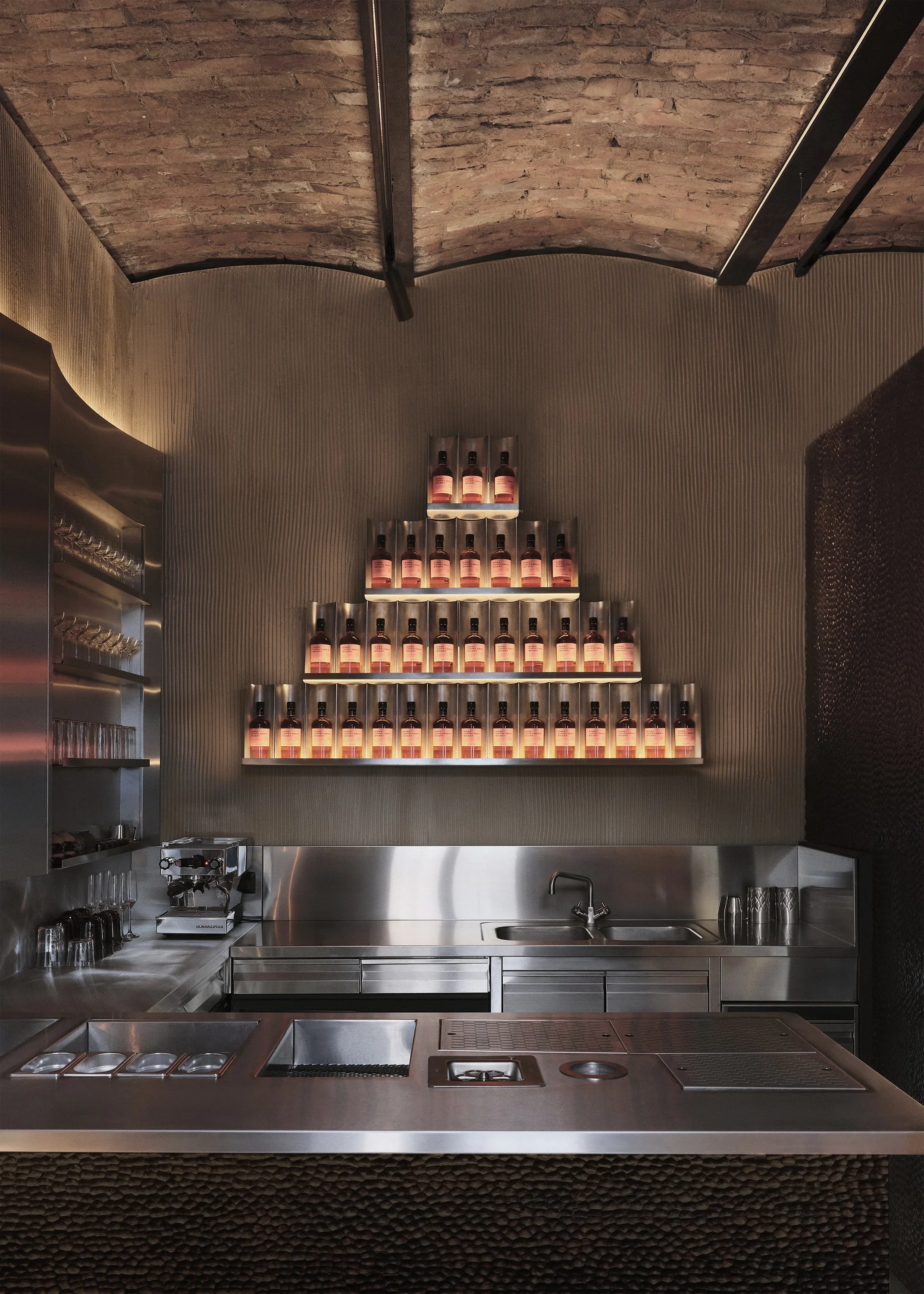
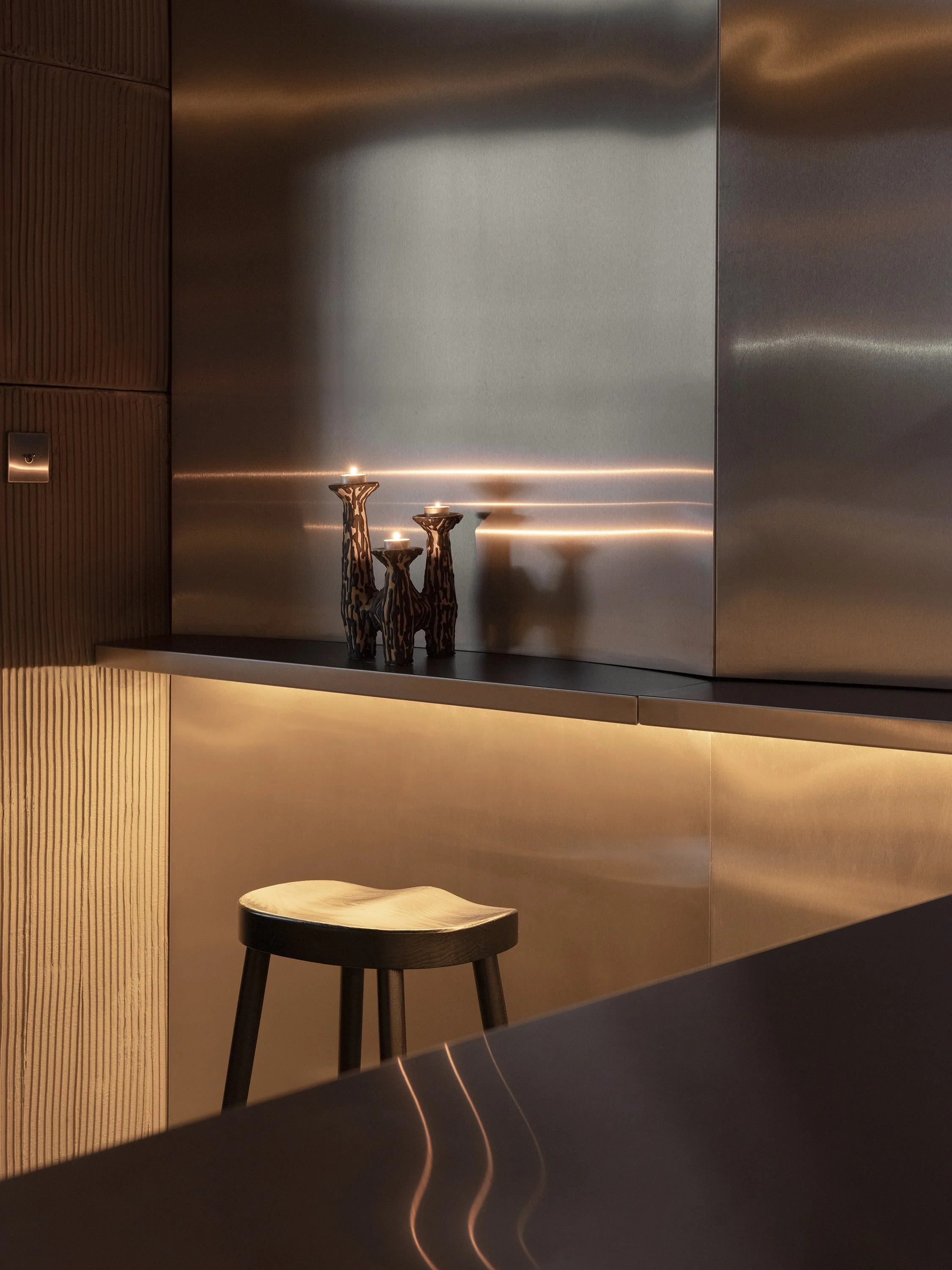
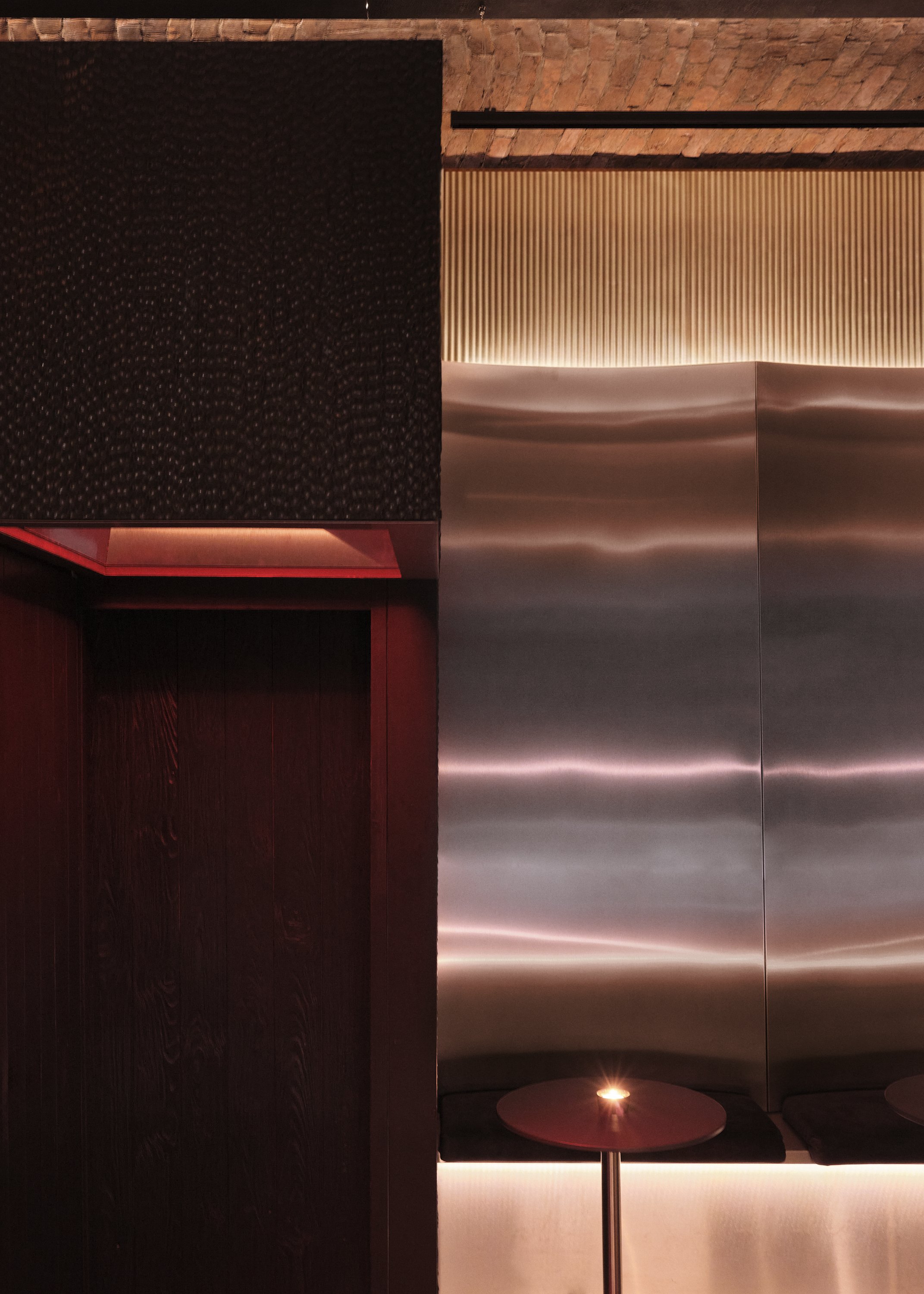
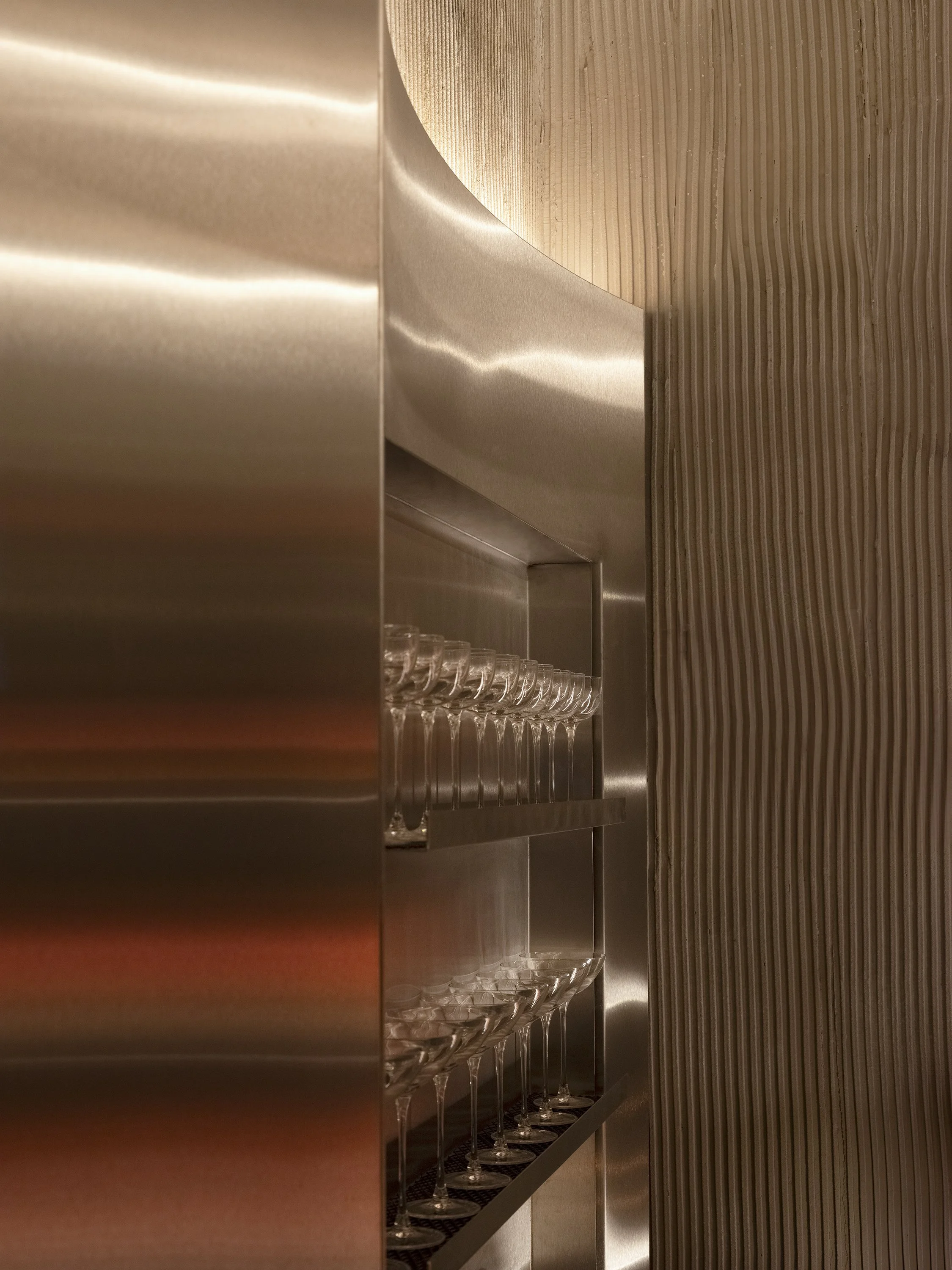
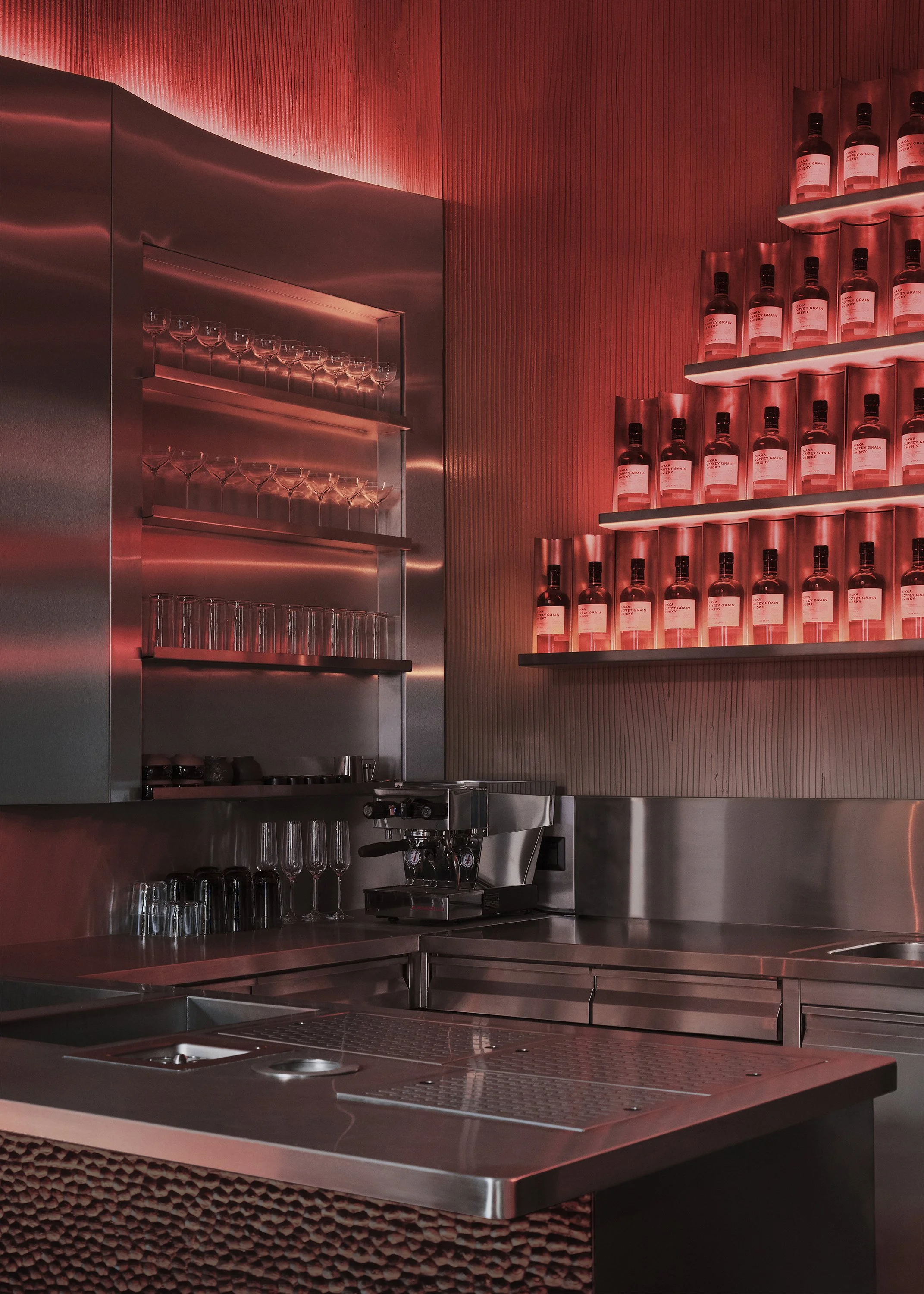
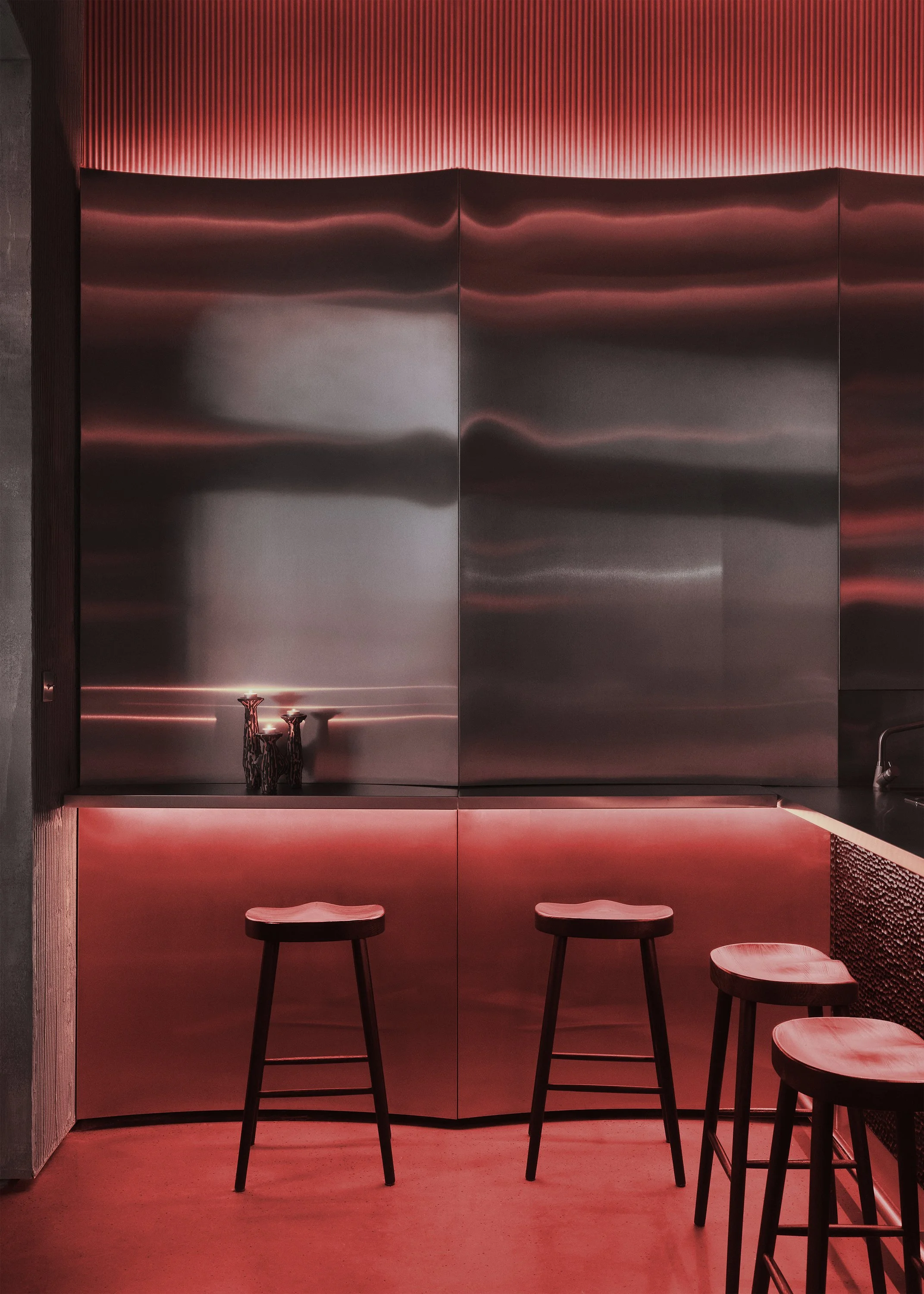
Curved stainless steel panels line the interior, their geometry following the rhythm of the vaulted ceiling while bending reflections and fragmenting the body into unstable compositions, making it difficult to fully grasp the depth and boundaries of the room at once. Within the compact space, surfaces shift with even slight movement, producing a continuously changing field that never fully settles into a single reading.
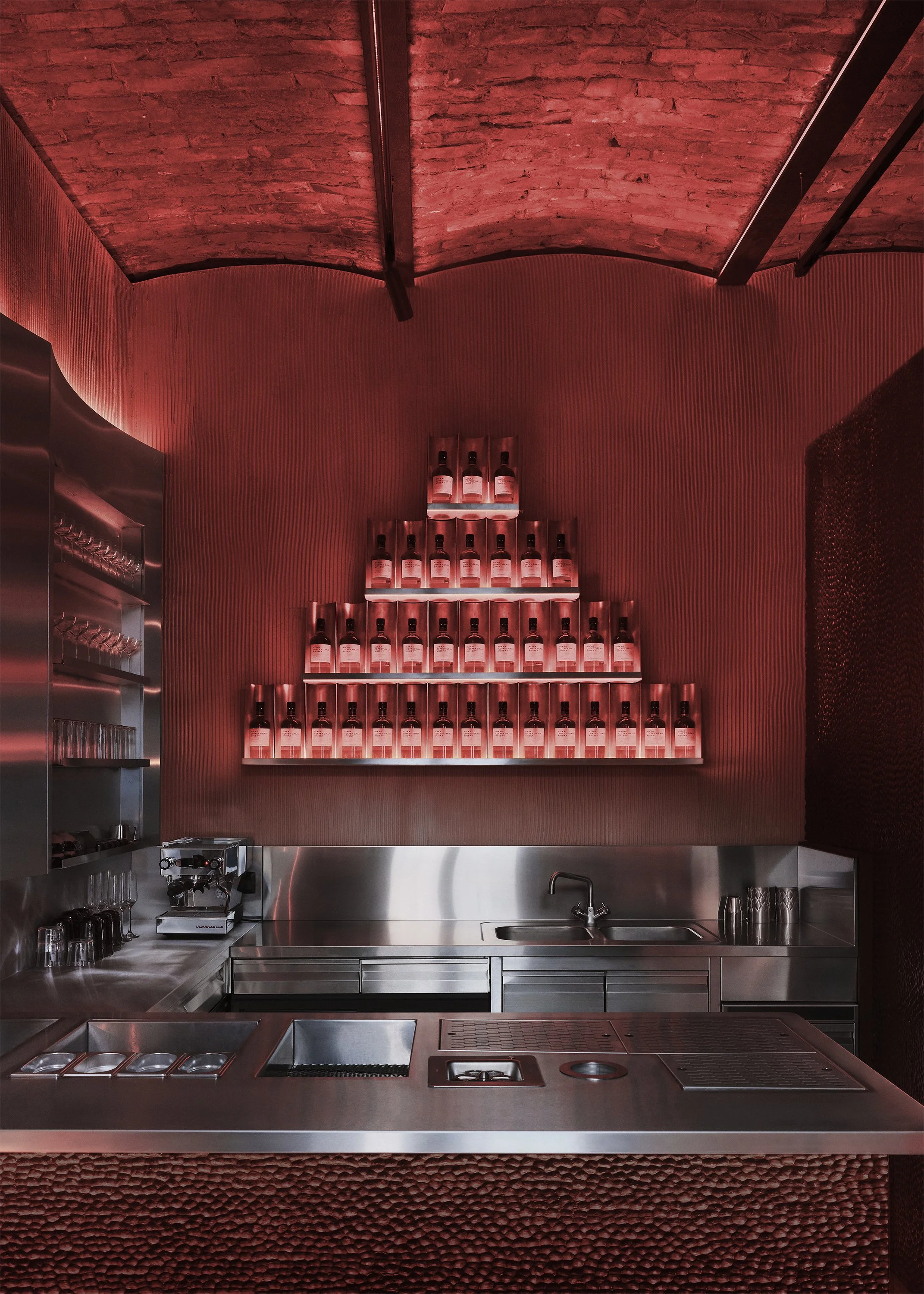
This effect is reinforced through the orchestration of light, fully integrated into the architecture and concealed from direct view, washing across walls and ceilings in soft gradients that emphasize curvature and reduce contrast. At certain moments, the interior is immersed in a saturated red field that compresses spatial depth and flattens visual hierarchy; at others, warmer and more neutral tones re-emerge, bringing forward textures and material differences that had receded into the background. These transitions follow the rhythm of the evening, allowing the space to move gradually between states.
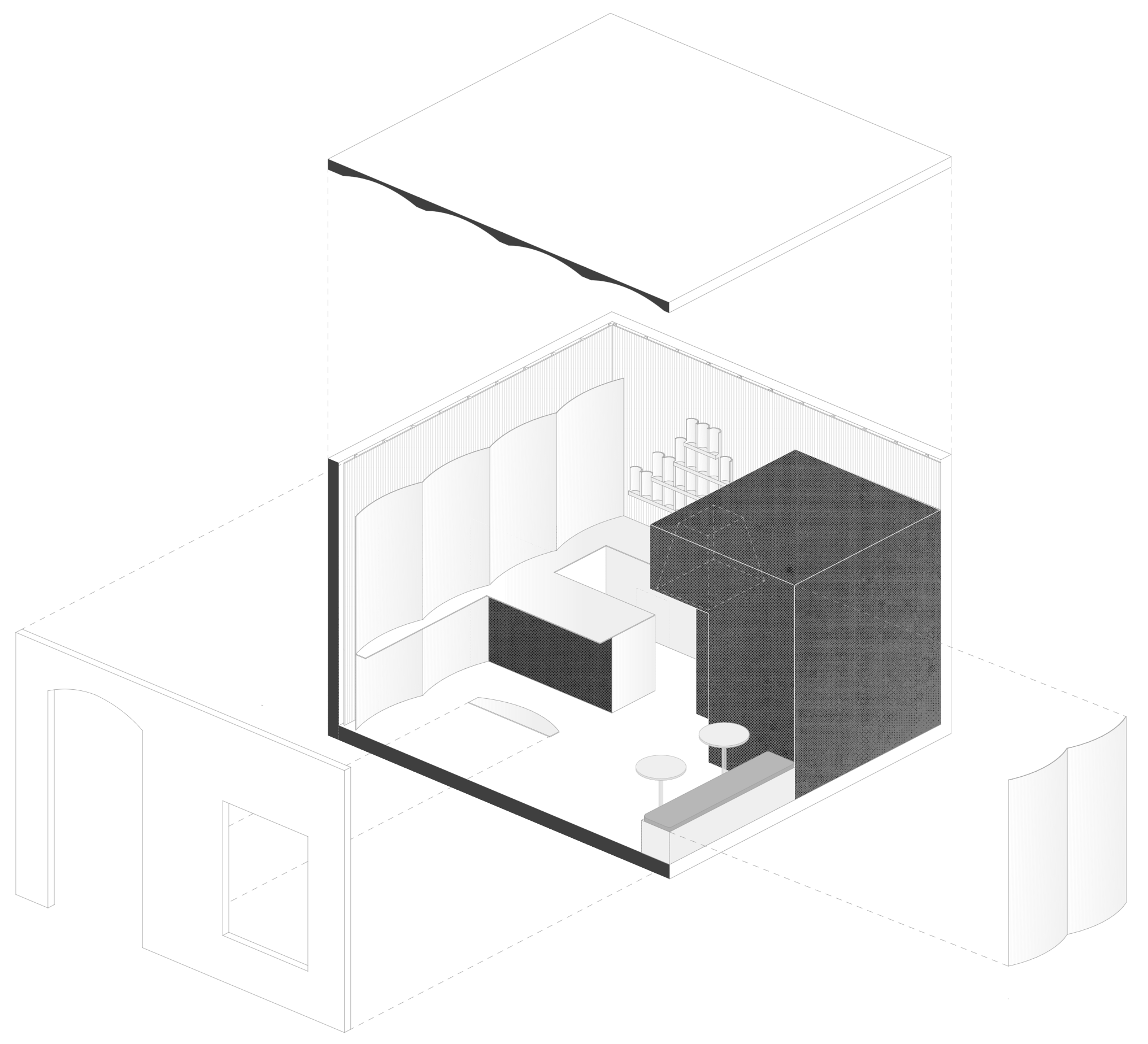
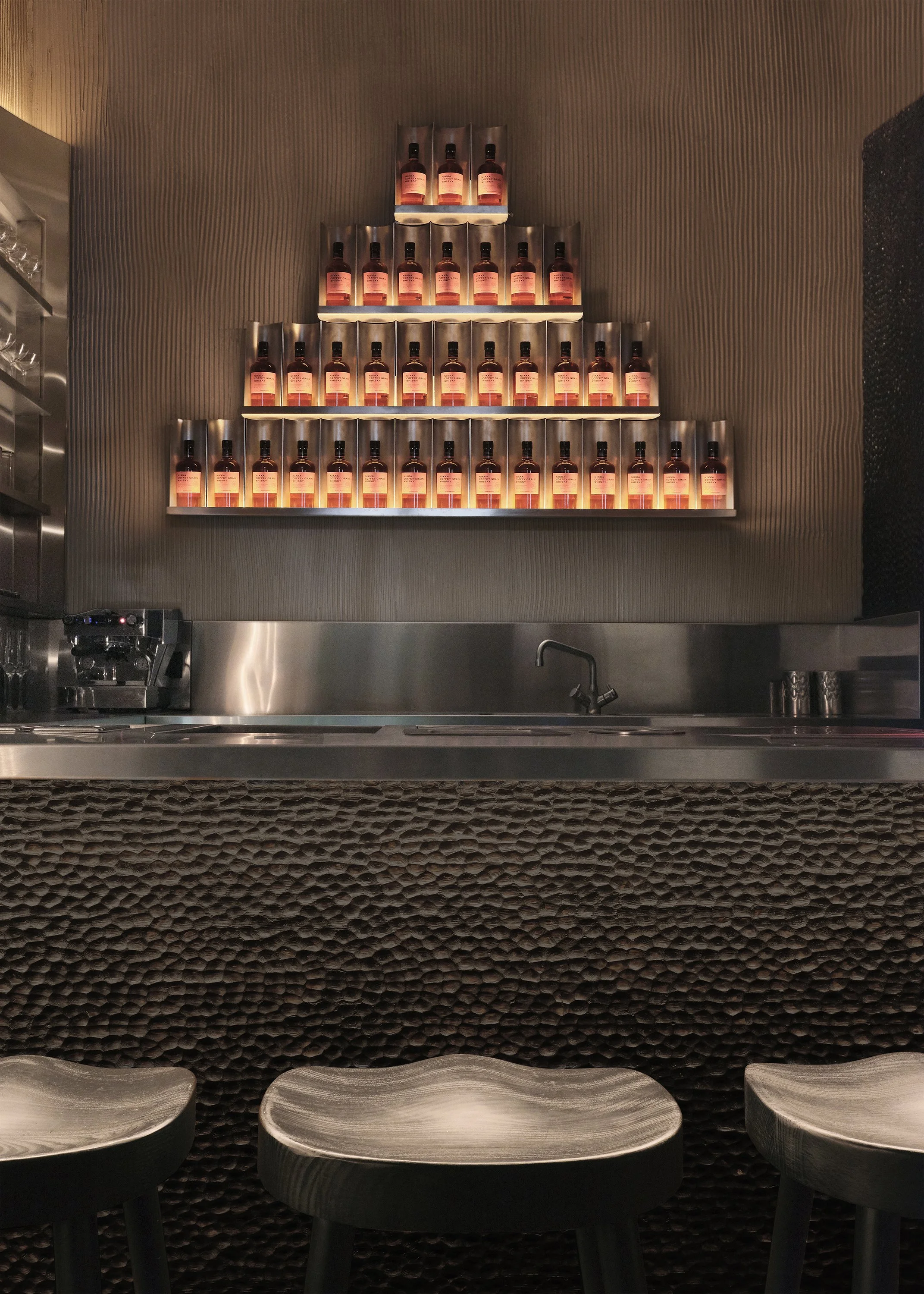
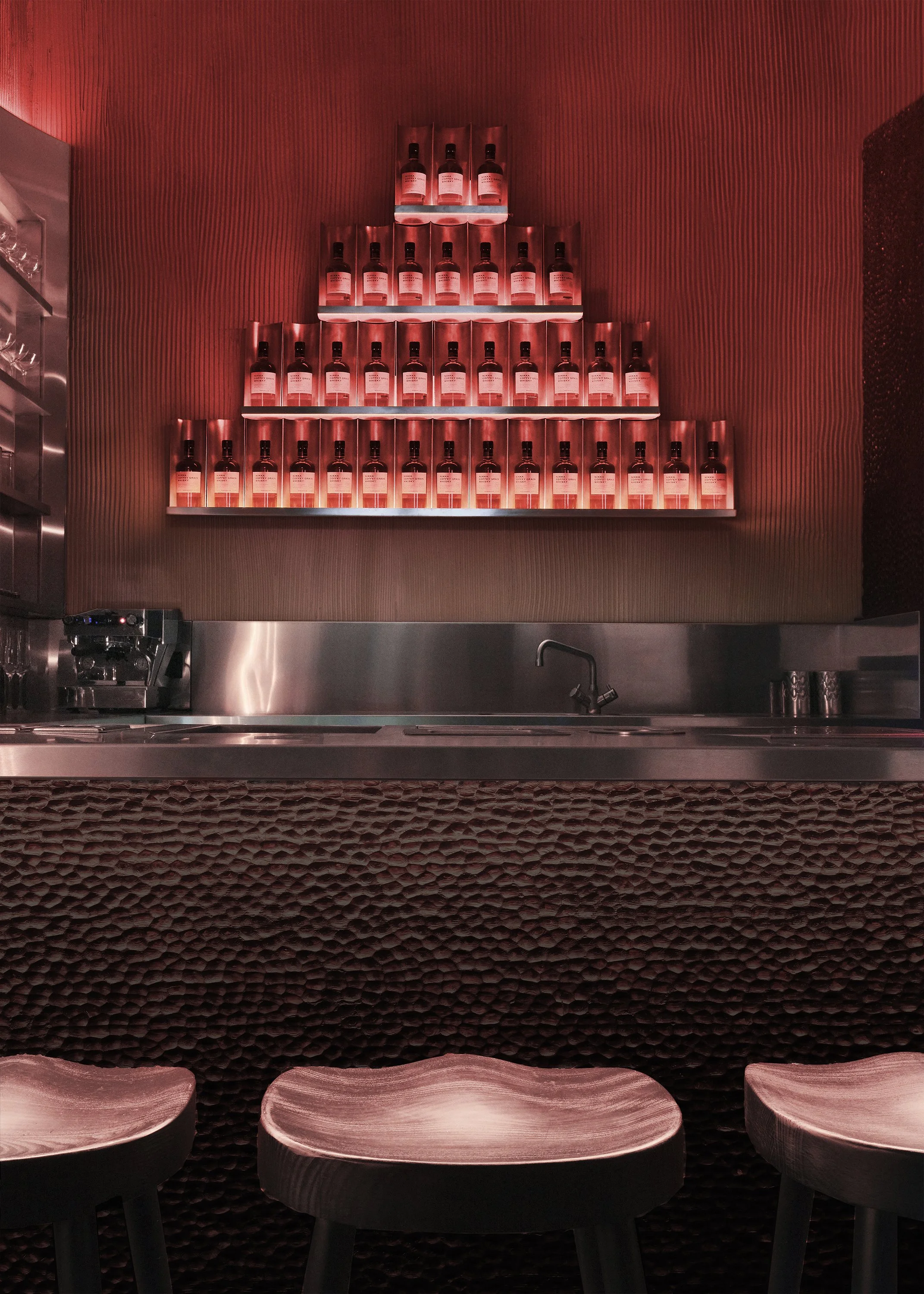
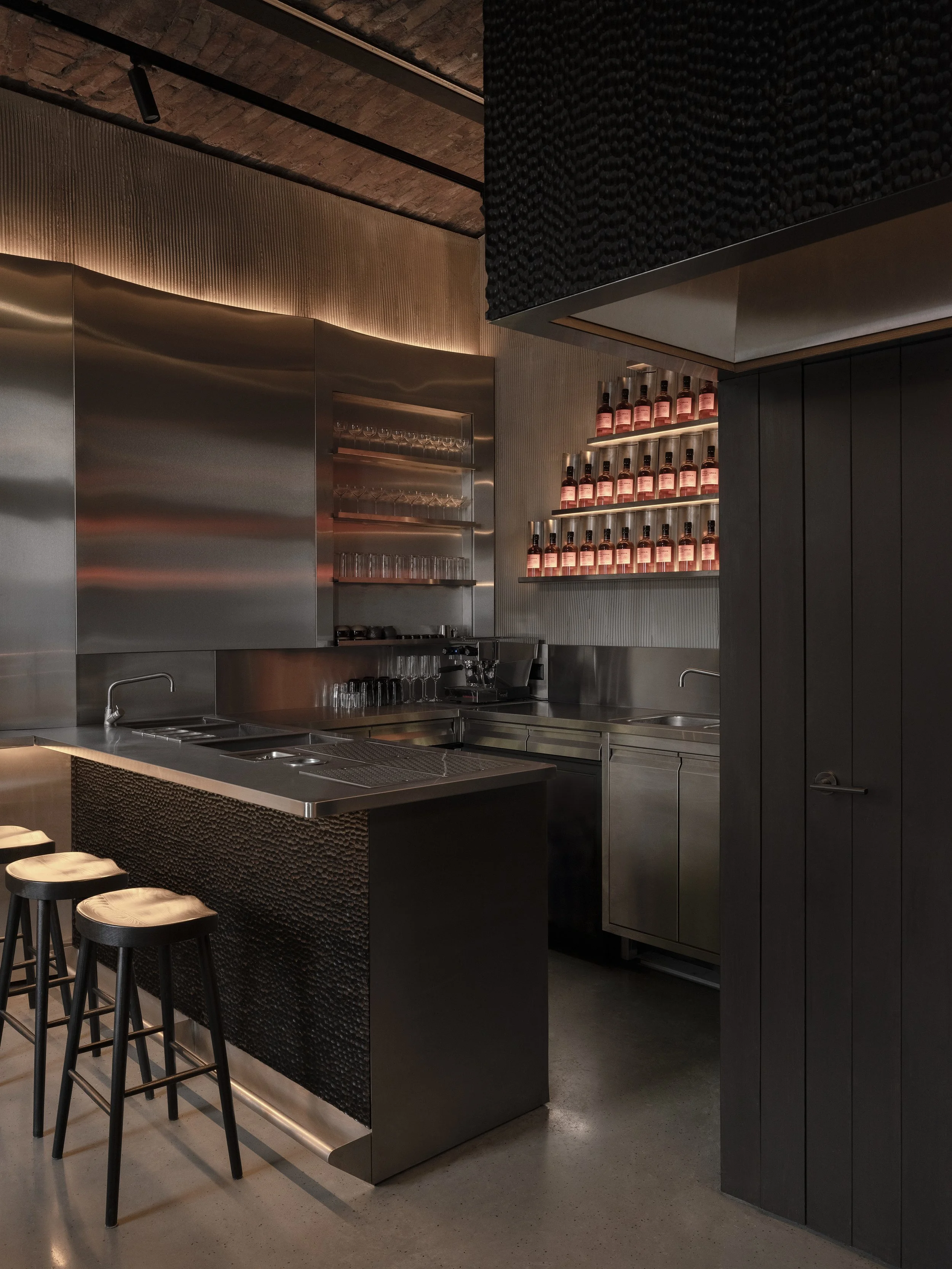
A substantial portion of the interior is occupied by a compact service core—housing storage and utilities—treated as a monolithic, almost totemic object, its charred and chipped surface carrying an archaic, hand-formed presence. A faint smoky aroma lingers around it, reinforcing its material and atmospheric weight within the space.
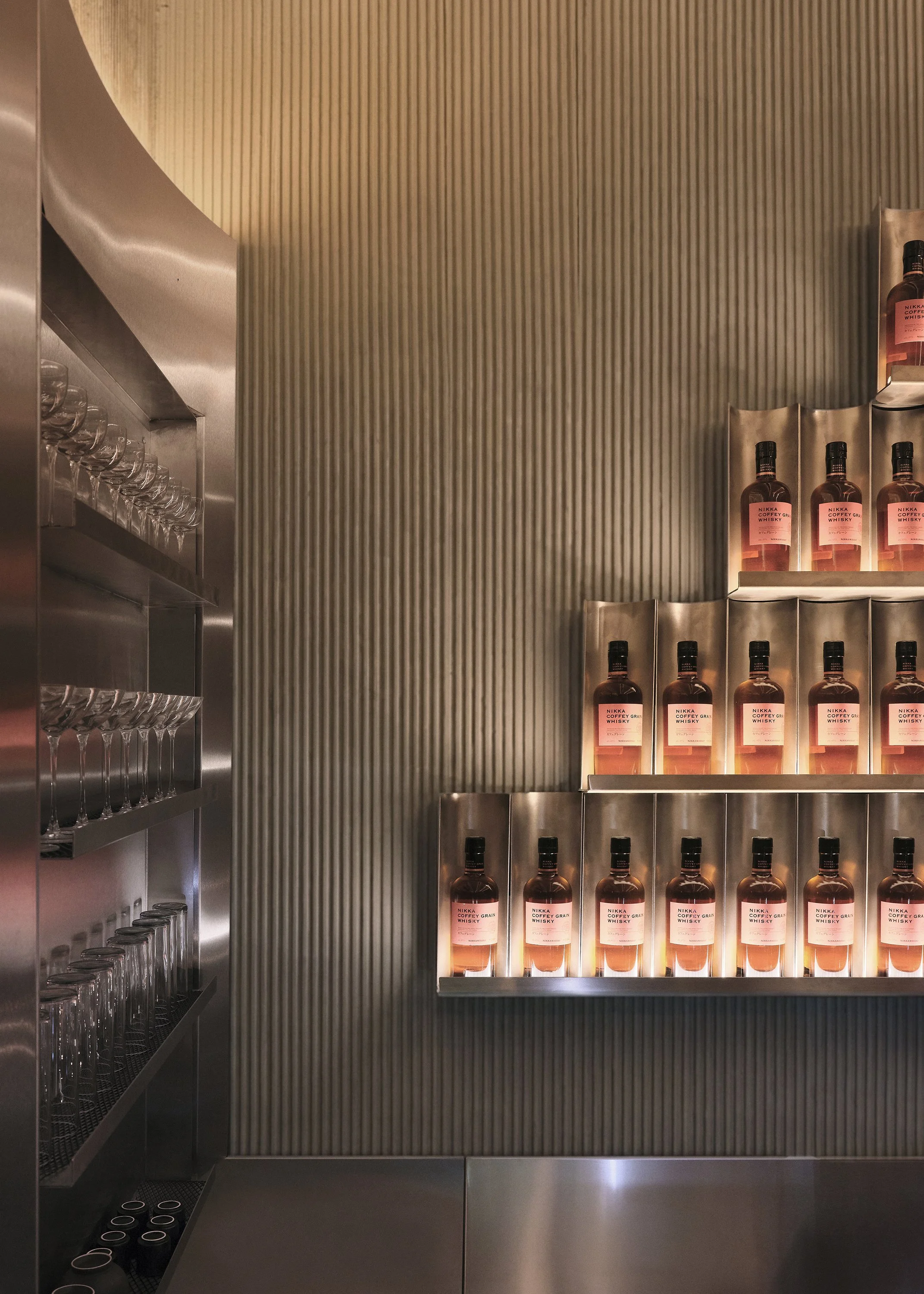
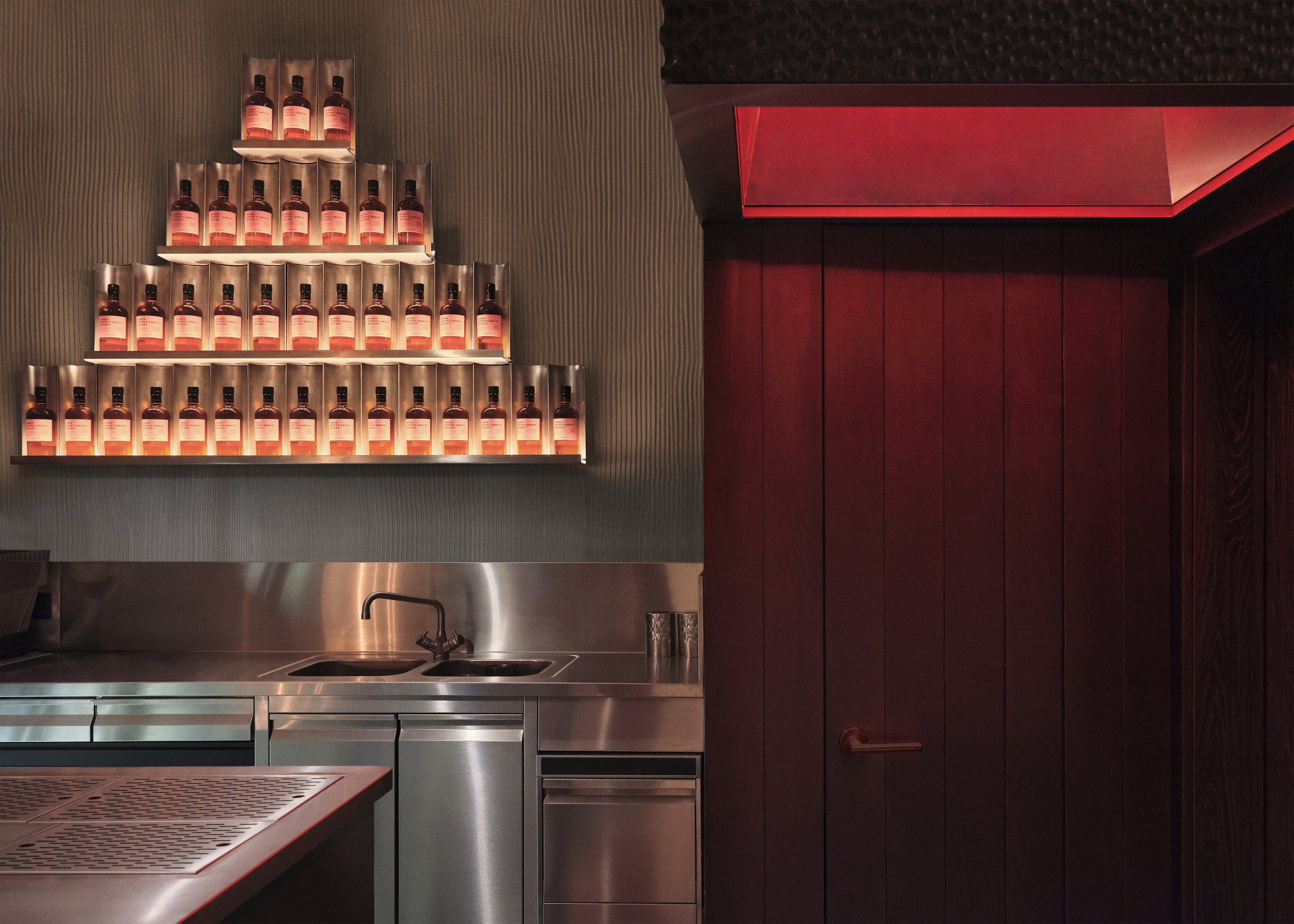
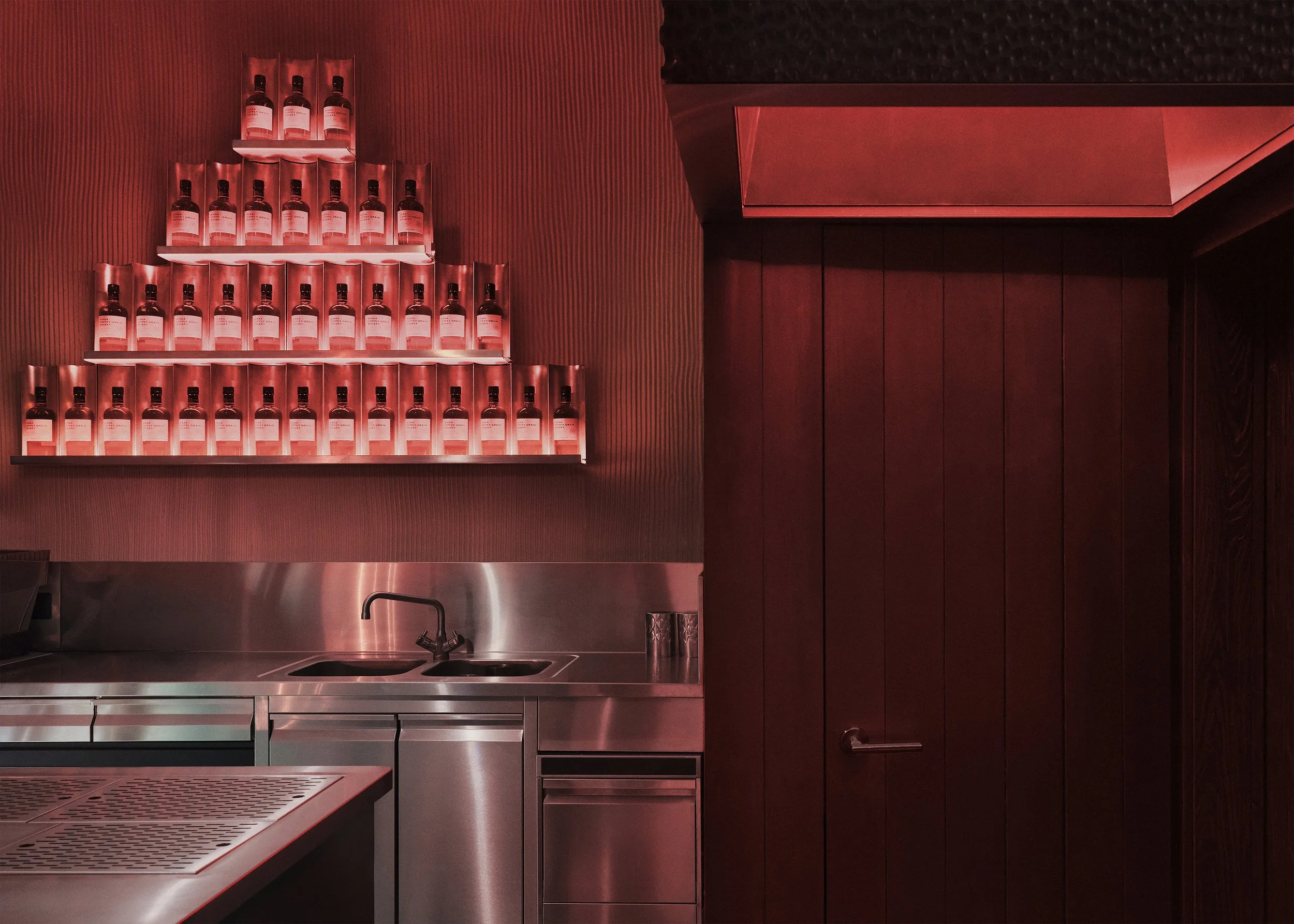
Behind the bar, a triangular display of bottles establishes a focal point, its lighting and positioning giving it a measured, almost ceremonial presence. The surrounding elements, including the bar counter and black wooden seating, are reduced to precise and controlled forms. Stainless steel surfaces introduce a sharper, more exact register, bringing associations closer to instruments of preparation, where liquids are measured, combined, and transformed with deliberate precision, framing mixology as a practice rooted in control and experimentation.
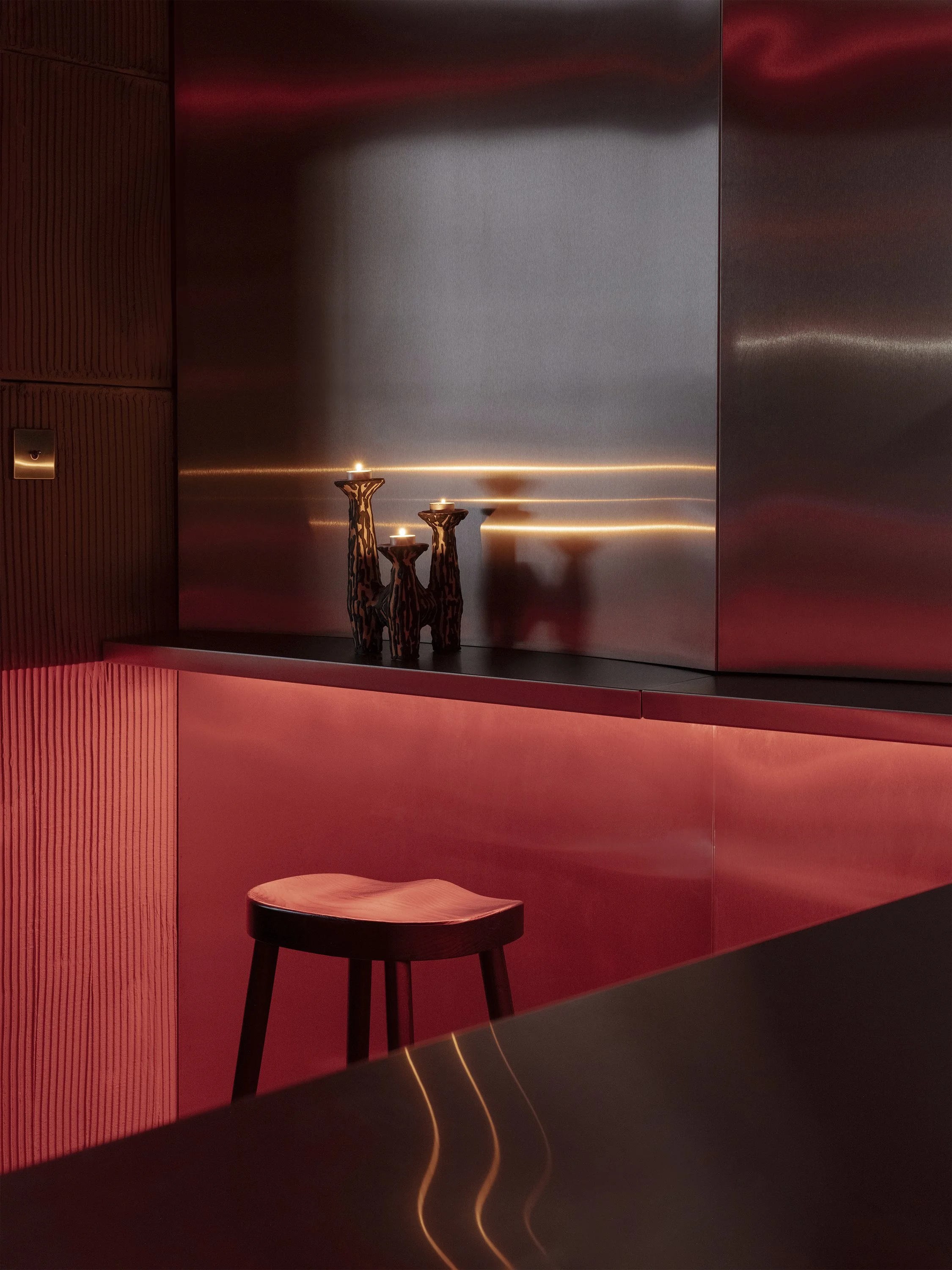
References to fire, smoke, and ritual run through the project, embedded in the lighting, the scent, and the spatial composition. Within the intimate scale of the interior, perception adjusts quickly, and the atmosphere settles into a distinct presence, where attention is drawn to subtle shifts in light, reflection, and material.